

Greenland’s prime minister has made clear that his people would side with Denmark rather than the United States if they were forced to choose immediately, in the strongest statement yet from the semi-autonomous territory since US President Donald Trump revived his push to take control of the island.
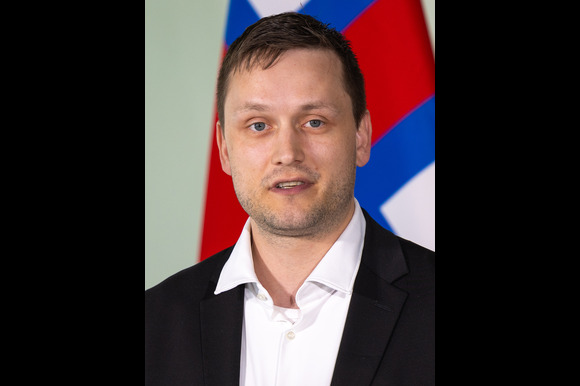
Jens-Frederik Nielsen made the remarks during a joint press conference in Copenhagen with Danish Prime Minister Mette Frederiksen, directly responding to renewed claims from Trump that the US should annex Greenland for security reasons.
Trump has argued that Washington needs to “own” Greenland to counter threats from Russia and China. The White House has suggested the possibility of purchasing the island and has not ruled out the use of force to bring it under US control.
Denmark, which is a fellow NATO member, has strongly rejected the idea. Frederiksen has warned that any use of military force against Greenland would effectively destroy the trans-Atlantic defence alliance. When asked later on Tuesday about Nielsen’s comments, Trump dismissed them, saying: “That’s their problem. I disagree with him… That’s going to be a big problem for him.”
Although Greenland is one of the most sparsely populated territories in the world, its position between North America and the Arctic gives it major strategic importance. The island plays a key role in missile early-warning systems and in monitoring shipping activity across the region.
Trump has repeatedly described Greenland as critical to US national security, claiming without providing evidence that Russian and Chinese vessels were operating extensively in nearby waters.
The United States already maintains a permanent military presence in Greenland, with more than 100 personnel stationed at the Pituffik base on the island’s north-western coast. The facility has been operated by the US since the Second World War.
Under long-standing defence agreements with Denmark, Washington is permitted to deploy additional troops to Greenland if it chooses. However, Trump said last week that leasing arrangements were no longer sufficient, insisting that the US must have full ownership of the territory and that NATO needed to accept this position.
Speaking in Copenhagen, Frederiksen condemned what she called “completely unacceptable pressure from our closest ally” and warned that relations could face even greater strain in the period ahead.
Nielsen described the situation as a “geopolitical crisis” but left no ambiguity about Greenland’s stance.
“If we are forced to choose between the United States and Denmark here and now, we choose Denmark,” he said. “Greenland does not want to be owned by the United States, governed by the United States, or become part of the United States.”
The press conference took place one day before Danish Foreign Minister Lars Løkke Rasmussen and Greenland’s foreign affairs minister, Vivian Motzfeldt, were due to travel to Washington for talks with US Vice-President JD Vance and Secretary of State Marco Rubio.
Denmark’s NATO allies, including major European nations and Canada, have voiced support for Copenhagen, emphasising that decisions about Greenland’s future can only be made by Denmark and the Greenlandic people.
Allies stressed that while Arctic security is a shared priority with the US, it must be pursued collectively within the alliance framework. They also reaffirmed their commitment to the UN Charter, including respect for sovereignty, territorial integrity and established borders.
Renewed concern over Greenland’s future followed Trump’s recent use of military force in Venezuela to seize President Nicolás Maduro, raising fears that similar tactics could be considered elsewhere.
Trump had previously attempted to buy Greenland in 2019 during his first term, an offer that was swiftly rejected as the island was “not for sale”.
Interest in Greenland has grown in recent years as climate change accelerates the melting of its ice, making vast natural resources more accessible. These include rare earth minerals, uranium and iron, and scientists believe the territory may also hold significant oil and gas reserves.