


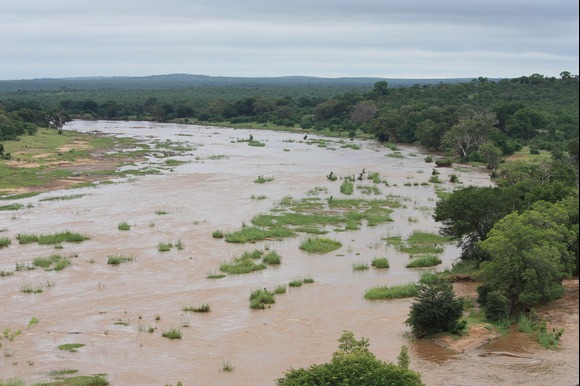
Severe flooding in South Africa’s northern provinces of Limpopo and Mpumalanga has prompted the closure of the world-renowned Kruger National Park, with authorities suspending visitor access and airlifting some tourists and staff to safety by helicopter.
At least 19 people are now believed to have lost their lives in recent weeks after relentless heavy rainfall triggered widespread flooding across parts of the country, destroying dozens of homes and damaging critical infrastructure.
Among the victims was a five-year-old boy who died in the town of Giyani in Limpopo province. President Cyril Ramaphosa visited the area to assess the extent of the damage and met with the child’s family to offer his condolences.
The South African Weather Service has issued a red level 10 warning, its highest alert, forecasting further heavy rainfall in already affected regions. Communities have been urged to remain on high alert, with authorities advising residents to stay indoors where possible and avoid travelling on flooded roads. “Never drive on a road covered by water,” the weather service warned. “If a vehicle stalls, leave it immediately and seek higher ground.”
Residents have also been advised to move valuables to safe locations above expected flood levels, switch off electricity at the main source, and relocate livestock to higher ground to reduce losses.
Rangers at national parks say wildlife is not believed to be at significant risk, as animals typically move instinctively to higher terrain during periods of flooding.
In recent days, helicopters and military units have been deployed to assist in rescue operations in some of the hardest-hit areas, helping stranded residents reach safety.
In Limpopo, several low-lying bridges have been swept away, while parts of the road network have been severely damaged or rendered impassable. Within Kruger National Park itself, staff accommodation was flooded overnight, forcing the evacuation of workers to safer locations.
According to the Reuters news agency, flooding across south-eastern Africa has become increasingly frequent and intense, a trend scientists link to climate change, which is making storms over the nearby Indian Ocean more powerful and unpredictable.