

The situation in Iran has become increasingly volatile following a series of major military developments that have shaken the country’s leadership and intensified regional tensions.
Supreme Leader Killed in Major Air Strikes
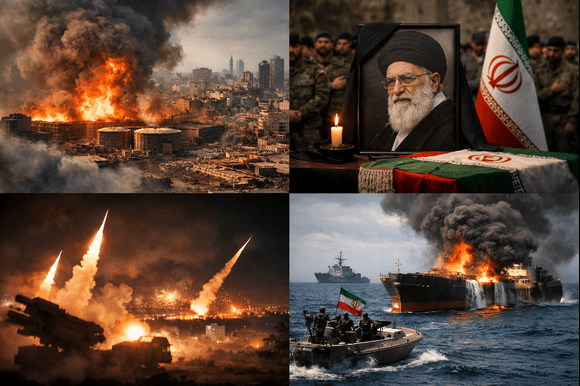
Iran confirmed that its long-time Supreme Leader, Ali Khamenei, was killed during large-scale coordinated strikes carried out by the United States and Israel. The attacks targeted high-value military and government facilities in the Iranian capital, Tehran, marking a historic moment for the Islamic Republic.
Khamenei’s death has created a major leadership vacuum in the country and triggered uncertainty within Iran’s political and military structure. Several senior commanders and security officials were also reportedly killed in the same strikes.
Widespread Damage and Civilian Impact
The strikes caused heavy destruction across parts of Tehran. Fuel depots and energy facilities were among the targets, sparking massive fires that sent thick smoke across the city. Residents reported severe air pollution and authorities warned people to stay indoors due to hazardous fumes and possible chemical contamination.
Hospitals in the capital are reportedly overwhelmed as casualties continue to rise. Thousands of people have been injured while significant damage has been reported to infrastructure, including transportation and fuel supply systems.
Iran Launches Retaliatory Attacks
Following the attacks, Iran responded with missile and drone strikes against Israeli targets and U.S.-linked facilities across the region. Iranian forces have launched waves of projectiles aimed at military installations and strategic infrastructure.
Some of the retaliatory strikes have also targeted areas in the Gulf where American forces are stationed, raising concerns that the conflict could spread beyond the immediate battlefield.
Shipping and Energy Routes Under Threat
The conflict has also increased tensions around the Strait of Hormuz, one of the world’s most important oil transit routes. Iranian warnings to international shipping companies and reports of damaged vessels have heightened fears of disruptions to global energy supplies.
Any major escalation in this waterway could significantly impact international oil markets and global trade.
Iran Rejects Calls for Negotiations
Iranian officials have rejected calls from international leaders for immediate ceasefire talks with Washington. Tehran’s leadership argues that diplomatic trust has been broken following the strikes and says it will continue defending the country against foreign attacks.
Israeli leaders, meanwhile, have indicated that their military campaign could continue if Iranian military capabilities remain intact.
Uncertainty Over Iran’s Next Leader
With Khamenei gone, attention has turned to the process of selecting a new supreme leader. The powerful Assembly of Experts, the clerical body responsible for choosing the country’s highest authority, is expected to begin deliberations soon.
The leadership transition could take weeks and may trigger internal power struggles among political factions, clerics, and military elites.
Risk of Wider Regional War
The ongoing confrontation has raised fears of a broader Middle East conflict. Missile exchanges, drone strikes, and military deployments have already affected multiple countries across the region.
International organizations and world leaders are urging restraint, warning that further escalation could destabilize the Middle East and threaten global security.