


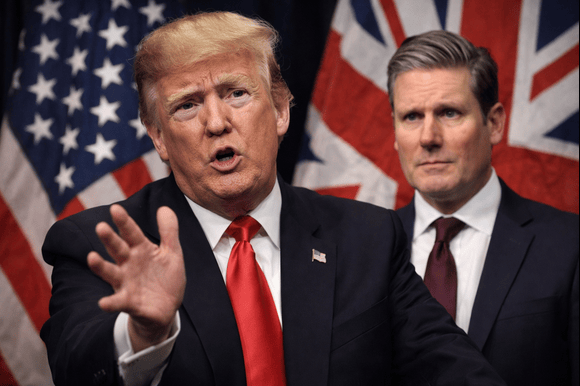
Washington / London – March 2026
Former U.S. President Donald Trump has sharply criticized British Prime Minister Keir Starmer, accusing the United Kingdom of trying to “join wars after we’ve already won them.” The remarks come amid rising tensions over Western military strategies and the ongoing conflicts involving Iran and broader Middle East security issues.
Trump’s Criticism
Speaking at a political event in the United States, Trump suggested that Britain often waits until conflicts are nearly resolved before fully committing its forces.
“Britain always wants to join the wars after we’ve already won,” Trump said, arguing that American military strength has historically carried the bulk of Western-led operations.
Trump’s comments appeared to be aimed directly at Starmer’s recent statements about strengthening security cooperation with the United States and European allies during the escalating crisis in the Middle East.
Strain in Transatlantic Rhetoric
The remarks have sparked renewed debate about the transatlantic alliance between the United States and the United Kingdom, which has historically been one of the closest military partnerships in the world.
Political analysts say Trump’s comments reflect a broader criticism he has often made of NATO allies — that they rely too heavily on American military power while contributing less themselves.
During his presidency, Trump repeatedly pushed European allies to increase defense spending and warned that the U.S. should not bear the majority of security responsibilities for Western nations.
Starmer’s Position
Prime Minister Starmer has emphasized that Britain remains fully committed to international security partnerships and collective defense efforts through NATO.
Officials in London have not issued a direct response to Trump’s latest comments, but British leaders have previously stressed the importance of close cooperation with Washington during global crises.
Starmer has also pledged to strengthen the UK’s military readiness and maintain strong ties with the United States as geopolitical tensions continue to rise.
Political and Diplomatic Reactions
Trump’s remarks have triggered mixed reactions from political leaders and analysts. Some supporters of the former president argue that his comments highlight longstanding concerns about burden-sharing among Western allies.
Others say the statement risks undermining diplomatic unity at a time when Western countries are trying to coordinate responses to growing global security challenges.
A Longstanding Debate
The debate over military contributions between the U.S. and its allies is not new. Since the Cold War, Washington has frequently urged European countries to increase defense spending and take a larger role in international security missions.
Despite occasional political friction, the United States and the United Kingdom remain key strategic partners, cooperating closely on intelligence sharing, defense technology, and military operations around the world.