

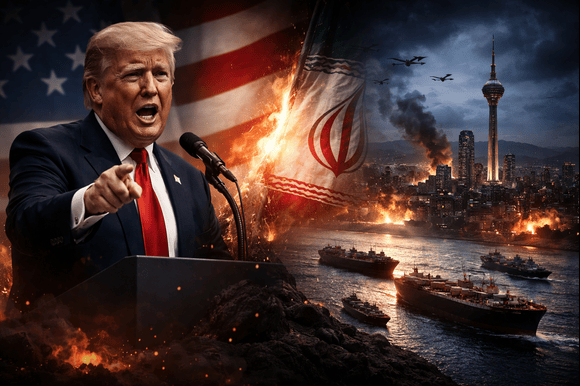
Tehran has formally replied to Washington’s 15-point framework aimed at ending the ongoing US–Israel war with Iran, asserting what it described as its “natural and legal right” over the Strait of Hormuz. The response comes as US President Donald Trump claimed that Iran was “begging to make a deal,” highlighting a stark contrast in narratives from both sides.
According to Iran’s Islamic Revolutionary Guard Corps-linked Tasnim news agency, an “informed source” revealed that Tehran submitted its official response to the US proposal late Wednesday night and is now awaiting Washington’s reply. The report, published Thursday, appeared to challenge Trump’s assertions, outlining conditions that suggest Tehran is maintaining a firm and uncompromising stance.
Among the key demands listed were a halt to what Iran described as “aggressive acts of assassination” that have severely impacted its leadership, including the deaths of Supreme Leader Ali Khamenei and senior security figure Ali Larijani. Tehran also called for compensation and war reparations, guarantees to prevent future conflict, and a cessation of hostilities by all regional resistance groups involved in the fighting.
Iran’s state-run English-language broadcaster Press TV separately cited an unnamed official who described a similar five-point proposal encompassing these conditions, reinforcing the message of a hardened Iranian position.
Despite the tough rhetoric, there were indications of indirect diplomatic engagement. US special envoy Steve Witkoff stated on Thursday that Iran appeared to be seeking an “off-ramp” from the conflict. Speaking during a cabinet meeting at the White House, Witkoff noted “signs” that Tehran recognizes negotiations as its only viable path forward.
“We will see where things lead, and if we can convince Iran that this is the inflection point with no good alternatives for them other than more death and destruction,” Witkoff told reporters. He confirmed that Pakistan has been acting as a mediator and added that the US has received multiple outreach efforts from regional actors seeking a peaceful resolution. However, he also accused Iran of delaying meaningful progress in talks.
The Tasnim source sharply criticized the US proposal, accusing Washington of attempting to “deceive the world” by projecting a peaceful image while simultaneously keeping oil prices stable and preparing for a potential ground invasion. The source further claimed that US airstrikes conducted during ongoing negotiations have deeply undermined trust in Washington’s willingness to pursue genuine diplomacy.
Meanwhile, Trump reiterated his stance on Thursday via Truth Social, announcing a temporary pause in attacks on Iran’s energy infrastructure for 10 days, until April 6. He framed the move as a response to Tehran’s request amid what he described as “ongoing” negotiations that were “going very well.”
Earlier remarks from Trump painted Iran as being in a weakened position. “We are absolutely obliterating Iran,” he said, asserting that the country’s navy and air force had been “completely” destroyed. He controversially described Iranians as “lousy fighters, but great negotiators,” while also claiming that US operations were “way ahead of schedule.”
These statements come against the backdrop of mounting global economic and humanitarian consequences. Iran has effectively restricted passage through the Strait of Hormuz—a crucial maritime route responsible for roughly 20% of global oil shipments—triggering fuel shortages worldwide and forcing governments and corporations to scramble for alternatives.
Trump also suggested that Iran had made a conciliatory gesture by allowing 10 oil tankers to pass through the strait. On the same day, however, Iranian media reported that lawmakers were considering legislation to impose tolls on vessels transiting the strategic waterway, underscoring ongoing tensions.
From Washington, Al Jazeera correspondent Alan Fisher reported that Trump is facing increasing domestic pressure, including rising fuel prices, worsening cost-of-living conditions, and disruptions at major airports. According to Fisher, Trump is seeking validation from his cabinet while aiming to conclude the war within the four-to-six-week timeline he has publicly outlined.
“He wants to be able to say: ‘See, it was done. I predicted it. I was right,’” Fisher noted, reflecting the political stakes tied to the conflict’s outcome.
US Vice President JD Vance echoed Trump’s assessment, stating that Iran’s conventional military capabilities have been “effectively destroyed.” Vance claimed that Iran no longer possesses a functional navy and has lost much of its ability to carry out significant retaliatory strikes.
In a related development, Israel reportedly removed Iranian Foreign Minister Abbas Araghchi and Parliament Speaker Mohammad Baqer Qalibaf from its target list. This decision followed diplomatic intervention by Pakistan, which urged Washington to الضغط Israel to avoid targeting figures who could play a role in potential negotiations, signaling cautious efforts to preserve diplomatic channels amid the ongoing conflict.