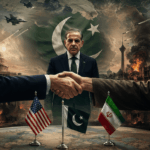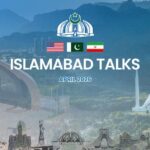


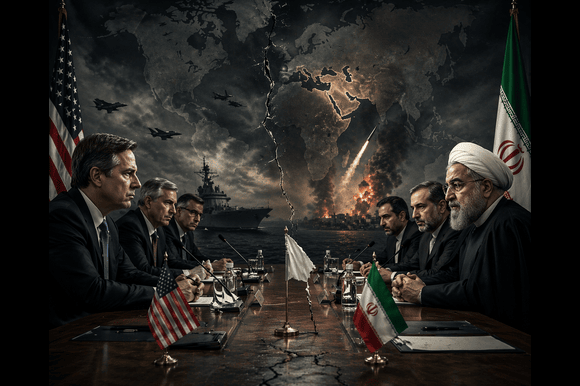
A fresh round of uncertainty has cast a shadow over the much-anticipated ceasefire negotiations between the United States and Iran, even as both sides move forward with preparations to attend the talks in Islamabad.
Officials confirmed that the US delegation has departed for Pakistan ahead of Saturday’s planned negotiations, while Iran’s government announced that its representatives have already arrived in the capital. The developments initially raised hopes that diplomacy would take center stage following days of fragile calm. However, escalating tensions and conflicting interpretations of the ceasefire terms now threaten to derail the process before it formally begins.
The ceasefire agreement, announced earlier in the week, had temporarily halted hostilities in the ongoing conflict involving the US, Israel, and Iran. Yet, the fragile truce has quickly come under strain as disagreements deepen over a 10-point proposal put forward by Tehran to outline the conditions for pausing the fighting.
Both Washington and Tehran have since offered sharply differing accounts of what was agreed upon. One of the most contentious issues remains whether the ceasefire extends to Israel’s ongoing military operations in Lebanon—a point that has become central to the diplomatic standoff.
On Friday, Mohammad Bagher Ghalibaf publicly warned that the disagreement could undermine the talks entirely. In a statement posted on social media, he stressed that key provisions had yet to be implemented, including a cessation of hostilities in Lebanon and the release of Iran’s frozen financial assets.
“These two matters must be fulfilled before negotiations begin,” Ghalibaf stated, making it clear that Tehran views these steps as essential preconditions for meaningful dialogue.
Ghalibaf is expected to be part of Iran’s delegation at the Islamabad talks, alongside Foreign Minister Abbas Araghchi. Iranian state media later confirmed the arrival of the delegation in Pakistan, reiterating that negotiations would only proceed if the US accepts Tehran’s outlined conditions.
Adding to the tension, Iran’s military leadership issued a stark warning, declaring that its forces remain on high alert due to what it described as repeated “breaches of trust” by the US and Israel. The statement underscored the fragile nature of the ceasefire and signaled that any perceived violations could trigger a rapid escalation.
Meanwhile, US President Donald Trump adopted a combative tone in remarks made on Friday, raising the stakes ahead of the negotiations. Speaking to media outlets and later posting on social platforms, Trump warned that the US is prepared for a significant military response if talks fail.
“We’re loading up the ships with the best weapons ever made,” he said, adding that Washington would not hesitate to use them “very effectively” if a deal is not reached. In separate posts, Trump accused Iran of attempting to leverage its control over the Strait of Hormuz to pressure the international community, describing it as a form of “short-term extortion.”
Despite the ceasefire, violence has continued to flare in the region, particularly in Lebanon, where Israeli military operations remain ongoing. The Trump administration has credited the truce with preventing a broader escalation, noting that just hours before the agreement was reached, the president had warned of catastrophic consequences if the conflict intensified further.
However, the lack of clarity surrounding the ceasefire framework has complicated efforts to sustain the pause in hostilities. While Iran insists that the deal includes provisions related to Lebanon, both the US and Israel have denied this, highlighting a fundamental gap in understanding between the parties.
There are also broader disagreements over several critical issues, including Iran’s control over the Strait of Hormuz, access to frozen Iranian assets, and the future of Tehran’s nuclear programme. These unresolved questions continue to loom large over the negotiations and may prove difficult to reconcile.
In an apparent attempt to ease tensions, Trump indicated that he had encouraged Israeli Prime Minister Benjamin Netanyahu to scale back military operations in the lead-up to the talks. He suggested that Israel should adopt a more restrained approach as diplomacy unfolds.
Nevertheless, reports from southern Lebanon suggest little change on the ground. Airstrikes and military activity have persisted, with observers noting no significant slowdown in operations. The continued violence has further complicated the diplomatic environment and raised doubts about the feasibility of achieving a lasting agreement.
Elsewhere in the region, Kuwait reported intercepting multiple drones that entered its airspace from Iran within a 24-hour period, underscoring the broader regional volatility that continues to simmer despite the ceasefire.
Amid the rising tensions, US Vice President JD Vance struck a more optimistic tone as he departed for Pakistan to lead the American delegation. He expressed cautious confidence that the talks could yield positive results, provided Iran engages constructively.
“If the Iranians are willing to negotiate in good faith, we are certainly willing to extend an open hand,” Vance said. At the same time, he warned that any attempt to exploit the process would be met with a firm response, emphasizing that the US negotiating team would not be easily swayed.
Vance’s leadership of the delegation reflects internal dynamics within the US administration. Seen as a prominent voice within the non-interventionist wing of Trump’s political base, his appointment is also viewed as an effort to address Iran’s distrust of other key figures, including former envoy Steve Witkoff and Trump’s son-in-law Jared Kushner, who previously led indirect negotiations with Tehran.
Those earlier diplomatic efforts ultimately failed to produce lasting results. The first round of talks collapsed following the outbreak of a 12-day conflict between Israel and Iran in June 2025, which ended with US strikes on key Iranian nuclear facilities. A second attempt at negotiations was derailed earlier this year when renewed hostilities erupted on February 28.
Now, as delegations gather in Islamabad, the stakes could hardly be higher. Pakistan, which has positioned itself as a central mediator in the crisis, faces the challenge of bridging deep divides between two adversaries with a long history of mistrust.
With conflicting demands, ongoing violence, and hardline rhetoric on both sides, the success of the upcoming talks remains far from certain. Yet, for a region teetering on the edge of wider conflict, the negotiations represent one of the few remaining opportunities to prevent further escalation and chart a path toward stability.