


Oil prices surged to their highest levels since 2022 after reports emerged that the United States military is preparing to brief Donald Trump on fresh plans for possible military action in the ongoing Iran conflict.
Benchmark Brent crude oil climbed sharply, rising nearly 7% to exceed $126 (£94) per barrel at one stage during trading. However, the spike proved short-lived, with prices later retreating significantly as market dynamics shifted.
According to a report by Axios, US Central Command has developed a strategy involving a series of “short and powerful” strikes targeting Iran. The objective of these proposed actions would be to break the current deadlock in negotiations with Tehran. Officials from both the US Central Command and the White House have yet to publicly confirm or deny the report.
Energy markets have been on edge throughout the week, largely due to faltering peace negotiations and the continued disruption in the strategically vital Strait of Hormuz. This narrow waterway is responsible for the transit of approximately 20% of the world’s oil and liquefied natural gas (LNG). Its effective closure amid escalating tensions has sent shockwaves through global energy markets, driving prices upward.
Earlier on Thursday, Brent crude reached $126.31 per barrel, marking its highest level since the onset of the Russian invasion of Ukraine. Despite this peak, prices later dropped sharply, settling closer to $114 per barrel by the end of the trading session.
Market analysts attribute part of this volatility to the expiration of futures contracts. These contracts, which allow traders to buy or sell oil at predetermined prices on specific dates, can significantly influence short-term price movements. Naveen Das, a senior oil analyst at Kpler, explained that the June Brent futures contract expired on Thursday, contributing to the sudden price decline. Meanwhile, the more actively traded July contract was priced lower, hovering around $110 per barrel.
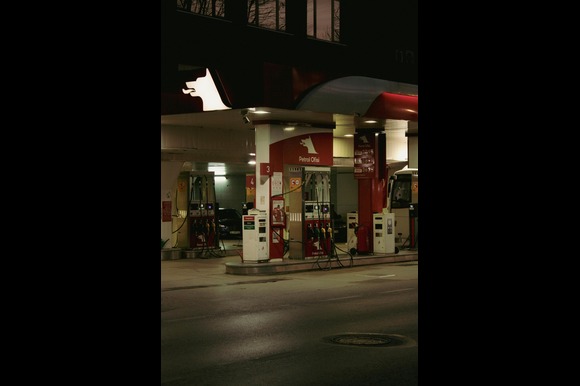
The surge in crude oil prices has direct consequences for consumers, as oil remains a fundamental component in the production of petrol and diesel. Since the outbreak of the Iran conflict, fuel costs have risen steadily, increasing the financial burden on motorists.
In the United Kingdom, petrol prices currently average 157 pence per litre, according to data from the RAC. This represents an increase of 24 pence compared to pre-war levels. Diesel prices have climbed even more steeply, now averaging 188.5 pence per litre—46 pence higher than before the conflict began.
Simon Williams, head of policy at the RAC, noted that although petrol prices at the pump have seen some recent easing, underlying wholesale costs remain elevated. He stated that petrol is now more expensive for retailers to purchase than at any previous point since the war started. On the other hand, diesel prices have shown slight improvement, dropping by 3 pence per litre and remaining below their peak wholesale levels, suggesting further reductions may be possible.
The broader economic implications of rising energy costs extend well beyond fuel prices. The UK government has cautioned that households may face increased expenses across multiple sectors, including energy bills, food prices, and airline fares.
Airlines have already begun responding to higher fuel costs by increasing ticket prices or reducing flight availability. Additionally, fertiliser prices have surged, raising concerns about agricultural production costs and the potential for higher food prices in the months ahead.
The Axios report also indicated that the proposed US military plans could involve targeting critical infrastructure within Iran. Another scenario under consideration reportedly includes efforts to take control of parts of the Strait of Hormuz in order to reopen it to commercial shipping. Such an operation could potentially require the deployment of ground forces, signaling a significant escalation in the conflict.
Meanwhile, a statement attributed to Mojtaba Khamanei asserted that Iran would take measures to secure the Strait of Hormuz and counter what it described as hostile actions against the waterway. The statement suggested that a “new chapter” in regional dynamics has been unfolding since the beginning of the US-Israeli conflict with Iran on 28 February.
The United States has indicated it may impose a blockade on Iranian ports for as long as Tehran continues to threaten vessels attempting to navigate the Strait of Hormuz. Such a move would further disrupt global energy supply chains and intensify economic pressures worldwide.
In response, Iran has warned it could target ships passing through the strait, escalating fears of a broader maritime conflict in one of the world’s most critical energy corridors.
Oil prices had already risen by around 6% on Wednesday following reports that Washington was preparing for an extended blockade of Iran. Analysts suggest that the possibility of further escalation is now firmly back in focus.
Naveen Das told the BBC that oil prices nearing $125 per barrel tend to trigger heightened concern among businesses and policymakers, as such levels can significantly impact economic stability.
Susannah Streeter, chief investment strategist at Wealth Club, warned that elevated costs could persist well into next year. She highlighted disruptions in urea shipments, a key component of fertiliser, noting that supply constraints have driven prices sharply higher for farmers worldwide—particularly those who did not secure supplies in advance.
She cautioned that these rising costs are likely to ripple through global supply chains, ultimately leading to higher prices for everyday goods later this year and into the next.
In Washington, energy executives met with President Trump earlier this week to explore strategies aimed at mitigating the impact of the conflict on American consumers. However, the discussions have done little to ease market concerns about prolonged supply disruptions.
Will Walker-Arnott, an investment manager at Raymond James, raised questions about how long the US administration can withstand the economic pressures associated with rising energy prices. He emphasized growing fears about inflation, noting that the sustained increase in oil prices is beginning to feed through into broader economic indicators.
Global financial markets have reacted unevenly to the unfolding situation. In Asia, stock markets closed lower, with Japan’s Nikkei 225 falling by 1.1% and South Korea’s Kospi declining by 1.4%.
Conversely, European markets showed resilience. London’s FTSE 100 ended the day 1.6% higher, while Germany’s DAX rose by 1.4% at the close. France’s CAC 40 also posted gains, finishing 0.5% higher. The broader pan-European STOXX Europe 600 index increased by just under 1.4%.
As geopolitical tensions continue to evolve, markets remain highly sensitive to developments in the Iran conflict, with energy prices and global economic stability hanging in the balance.