


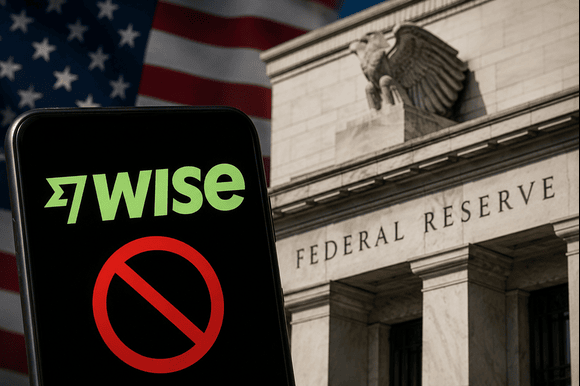
LONDON: Global financial technology company Wise has been denied direct access to the United States banking system after the US Federal Reserve rejected its application for a master account, dealing a setback to the company’s efforts to expand its banking capabilities in the world’s largest financial market.
The decision means Wise will continue to rely on partner banks to process payments and access key US financial infrastructure, rather than connecting directly to the Federal Reserve’s payment systems.
What is a Federal Reserve master account?
A Federal Reserve master account provides financial institutions with direct access to the US central banking system. Institutions holding such accounts can settle payments directly with the Federal Reserve, access services including Fedwire and FedNow, and avoid depending on intermediary commercial banks.
Obtaining a master account is widely regarded as a significant advantage because it reduces operational costs, improves payment efficiency, and allows institutions to offer faster financial services.
Without one, companies must continue routing transactions through traditional banking partners.
Why Wise applied
Wise, formerly known as TransferWise, has spent years expanding beyond international money transfers into broader financial services.
The London-based fintech applied for a Federal Reserve master account through its US banking subsidiary in an effort to gain direct access to America’s payment infrastructure.
The company argued that direct access would improve efficiency, lower transaction costs, and benefit customers by enabling quicker and cheaper cross-border payments.
Wise has increasingly positioned itself as an alternative to traditional banks, offering multi-currency accounts, international transfers, debit cards, and business banking solutions across dozens of countries.
Why the Federal Reserve rejected the application
According to reports, the Federal Reserve determined that Wise’s US banking entity did not satisfy the legal and regulatory requirements necessary to receive a master account.
Officials concluded that the institution’s structure and business model did not align with the standards applied to banks receiving direct access to the Federal Reserve’s payment system.
While regulators did not accuse Wise of wrongdoing, they maintained that granting direct access must remain limited to institutions meeting strict banking and supervisory requirements.
The decision reflects broader caution among US regulators regarding fintech firms seeking privileges traditionally reserved for federally supervised banks.
Impact on Wise
The ruling is not expected to interrupt Wise’s existing services.
Customers will continue sending and receiving money using the company’s current banking partners across the United States.
However, the rejection means Wise will be unable to bypass intermediary banks, limiting some of the operational efficiencies it hoped to achieve.
Industry analysts say the decision could slow the company’s ambitions to further integrate into the US financial system and may increase operating costs compared with institutions that have direct Federal Reserve access.
Despite the setback, Wise remains one of the world’s largest cross-border payments companies, serving millions of individual and business customers globally.
The Federal Reserve’s decision is being closely watched across the financial technology industry.
In recent years, numerous fintech companies have sought greater access to central banking infrastructure as they compete with traditional financial institutions.
Regulators, however, have generally taken a cautious approach, arguing that direct access to the payment system requires robust prudential supervision, strong capital requirements, and comprehensive risk management frameworks.
The case highlights the ongoing debate over whether modern fintech firms should receive the same access to central bank payment systems as conventional banks.
Supporters argue that allowing qualified fintech companies direct access would increase competition, lower costs, and encourage innovation.
Critics contend that expanding access without equivalent regulatory oversight could create new risks for financial stability.
Wise responds
Wise has expressed disappointment with the decision but said it remains committed to serving US customers through its existing banking relationships.
The company reiterated that its mission is to make international payments faster, cheaper, and more transparent regardless of the regulatory outcome.
Wise also indicated it would continue engaging with regulators while exploring future opportunities to strengthen its presence in the US financial market.
The Federal Reserve’s rejection represents an important moment in the evolving relationship between fintech companies and financial regulators.
As digital financial services continue to expand, policymakers around the world face increasing pressure to balance innovation with financial stability and consumer protection.
For Wise, the decision means continuing to operate successfully in the United States—but without the direct access to America’s central banking infrastructure that could have further strengthened its competitive position.