


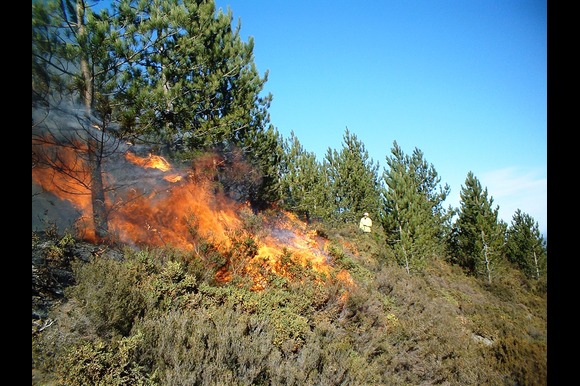
Firefighters are continuing an intense battle to contain massive wildfires advancing towards the French city of Bordeaux, while authorities have evacuated tens of thousands of residents from nearby communities as flames spread rapidly across southwestern France.
Speaking on Sunday, Bordeaux Mayor Thomas Cazenave said the wildfire was burning roughly 15 kilometres (9 miles) from the wider metropolitan area and approximately 25 to 30 kilometres (15 to 19 miles) from the city centre. Although the fire remains dangerously close, he sought to reassure residents that there were currently no plans to evacuate Bordeaux itself.
During the night and into Sunday morning, around 55,000 people were forced to leave villages south of Bordeaux in the Gironde region, an area internationally recognised for its world-famous vineyards. Emergency officials acted swiftly as changing weather conditions and rapidly advancing flames threatened populated communities.
The disaster forms part of a broader wildfire crisis sweeping across Europe over the past week. France and Spain have been among the hardest-hit countries, with more than 330,000 people evacuated as fires continue to spread through forests, rural communities and agricultural land.
France has suffered the greatest devastation, with approximately 42,000 hectares of land destroyed by fire in what officials describe as one of the country’s largest forest fire disasters since the Second World War. Since the beginning of the year, wildfires have scorched nearly 98,000 hectares across France, highlighting the severity of the current fire season.
Authorities estimate that more than 220,000 people have now been evacuated across southwestern France as emergency services struggle to contain multiple fire fronts.
Captain Nicolas Braz, one of the senior officers directing firefighting operations, described the blaze as highly unpredictable. He explained that the wildfire had become so intense it was generating its own weather system, producing powerful winds and whirlwinds that made suppression efforts increasingly difficult.
“The fire is creating its own winds, complete with whirlwinds,” Braz said, adding that the blaze had become “erratic and unmanageable.”
French Interior Minister Laurent Nuñez warned that conditions remained extremely dangerous, describing the situation as “very unfavourable.” He said the wildfire continued to move unpredictably towards the Bordeaux metropolitan area, making firefighting efforts especially challenging.
The emergency response has mobilised significant resources. In the Gironde region alone, approximately 2,500 firefighters—including specialist crews from Switzerland—are working alongside 1,500 military personnel. Nearly 1,200 police officers and gendarmes have also been deployed to coordinate evacuations, secure affected communities and assist rescue operations.
Authorities said dry vegetation, soaring temperatures and brisk winds have combined to create ideal conditions for the fire’s rapid spread. As a precaution, around 60 kilometres (37 miles) of the A63 motorway, a major transport route linking France to Spain, has been closed to traffic.
The wildfire emergency has even disrupted one of the country’s biggest sporting events. Organisers of the final stage of the Tour de France shortened Sunday’s race in Paris from 133 kilometres to 89 kilometres, allowing additional security personnel to be reassigned to support wildfire response operations.
French President Emmanuel Macron pledged long-term government support for affected communities, promising that France would rebuild after the disaster.
“We will rebuild,” Macron said, adding that the government would remain alongside impacted residents “for as long as is needed.”
Meanwhile, neighbouring Spain continues to battle its own growing wildfire emergency. More than 90,000 people have been evacuated from areas surrounding Madrid and the province of Ávila as multiple fires continue to spread.
Overnight into Sunday, firefighters also faced a new outbreak near the Mediterranean coastal city of Valencia, adding further pressure to already stretched emergency services.
Valencia regional President Juanfran Pérez Llorca acknowledged the scale of the crisis, telling reporters late on Saturday that the blaze had exceeded local firefighting capabilities.
“The fire is beyond our capacity to extinguish,” he said.
Pilar Bernabé, the Spanish government’s representative in Valencia, warned that weather conditions were expected to deteriorate further throughout Sunday. Forecasts predict continued high temperatures, low humidity and strong winds—factors that could significantly accelerate the fire’s expansion.
Authorities confirmed that one civilian died on Saturday in a separate wildfire in the Valencia region, marking the first civilian fatality reported during Spain’s current wildfire outbreak.
Earlier in the week, two firefighters lost their lives while battling the massive blaze near Bordeaux, underscoring the dangers faced by emergency crews working in extreme conditions.
Elsewhere in Spain, officials ordered evacuations in at least eight municipalities near Toledo late on Saturday. While authorities have not yet confirmed the number of residents affected, emergency services remain on high alert as fires continue to threaten populated areas.
Spanish Prime Minister Pedro Sánchez visited wildfire-hit communities west of Madrid on Sunday, warning that emergency crews still faced a difficult battle despite encouraging overnight progress.
“We still have difficult hours ahead,” Sánchez said, while noting there had been “positive” developments in efforts to contain some of the fires.
He also renewed calls for stronger national action on climate policy, saying Spain needed “a major public pact on the climate emergency” to better prepare for increasingly frequent extreme weather events.
Madrid regional President Isabel Díaz Ayuso described the wildfire as the most severe disaster ever experienced in the region, calling it “the worst fire in the history of the region.”
With scorching temperatures, prolonged drought and strong winds continuing across southern Europe, firefighters in both France and Spain remain engaged in an enormous effort to protect communities, infrastructure and natural landscapes as one of the continent’s most destructive wildfire seasons continues.