


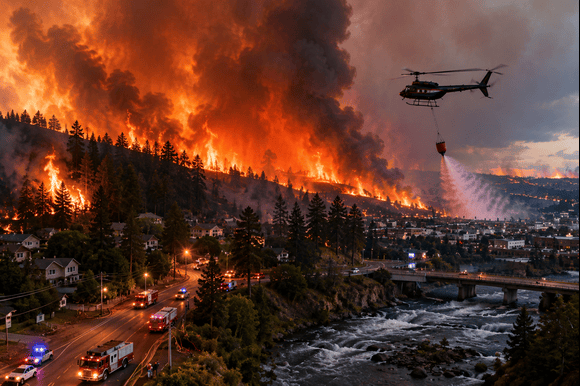
Wildfires have forced approximately 60,000 people to evacuate communities across parts of Washington state, where fast-moving flames have destroyed hundreds of homes and other buildings and left thousands of electricity customers without power.
Three major wildfires were still burning in and around the city of Spokane on Monday, as emergency officials warned that none of the major blazes had been fully contained. Authorities continued efforts to protect residential areas, assess widespread damage and support thousands of people who had been displaced by the rapidly spreading fires.
Spokane Mayor Lisa Brown described the emergency as “the worst natural disaster our region has faced”, saying officials were still working to determine the full scale of the destruction.
She said authorities were continuing to evaluate the damage caused by the fires and remained concerned about the possibility that lives may have been lost. However, no deaths or injuries had been officially confirmed as of Monday.
The wildfires surrounding Spokane are part of a wider fire emergency affecting Washington state. More than a dozen wildfires were burning across the state, including 10 major fires, according to information published on the Washington State Department of Natural Resources’ wildfire dashboard.
The National Weather Service had issued warnings of “extremely critical” fire weather conditions over the weekend. Powerful winds, unusually dry vegetation and low moisture levels created an environment in which flames were able to spread quickly and threaten communities.
Scientists have repeatedly warned that human-driven climate change is increasing the likelihood of the hot and dry conditions that contribute to severe wildfires. Climate change has also been linked to more frequent and intense heatwaves, longer periods of extreme heat and the growing risk of summer droughts, all of which can make landscapes more vulnerable to rapidly spreading fires.
Videos recorded in Spokane, Washington’s second-largest city, showed enormous columns of smoke rising into the sky as intense flames burned close to homes and residential neighbourhoods. Helicopters were seen flying over affected areas as emergency crews worked from the air and on the ground to contain the fires and prevent them from reaching more populated locations.
The wildfires have destroyed an estimated 600 buildings, including private homes, commercial properties and other structures. The scale of the destruction has created an urgent need for temporary housing and essential supplies for residents who were forced to leave their communities.
More than 10,000 electricity customers were without power, according to utility company Avista Utilities. Power outages affected homes and businesses across several areas, adding to the difficulties faced by residents who had already been displaced or were preparing to evacuate.
Washington State Governor Bob Ferguson declared a statewide emergency in response to the growing wildfire crisis. Speaking during a news conference on Sunday, Ferguson said he had requested federal assistance after discussing the situation with US President Donald Trump.
State officials urged residents living near affected areas to remain alert, follow evacuation instructions and prepare to leave immediately if authorities issue new warnings or mandatory evacuation orders.
“The most important thing is that people need to remain vigilant and be patient and comply when we ask them to be ready to evacuate or when we say it’s time to evacuate,” Ferguson said.
Officials also stressed that the scale of the disaster had placed significant pressure on emergency services, local authorities and organisations providing support to displaced residents.
The governor said that while local communities had shown strong support and first responders were working continuously, additional assistance would be needed to address the growing humanitarian and housing challenges.
“Although people are very generous and engaged and our first responders are working around the clock, we need help in order to really meet the magnitude of the displacement and the lack of housing and the need for essential living supplies,” she added.
Firefighters continued to battle the three major blazes around Spokane while emergency teams worked to identify damaged properties, restore essential services and help residents who had been forced from their homes.
Although wind conditions were expected to become lighter on Monday, weather forecasters warned that temperatures could rise again later in the week. The return of hotter conditions could increase the fire danger and make efforts to control the remaining wildfires more difficult.
Authorities said residents should continue monitoring official updates, remain prepared for possible evacuation orders and avoid returning to affected areas until emergency officials confirm that it is safe to do so.