


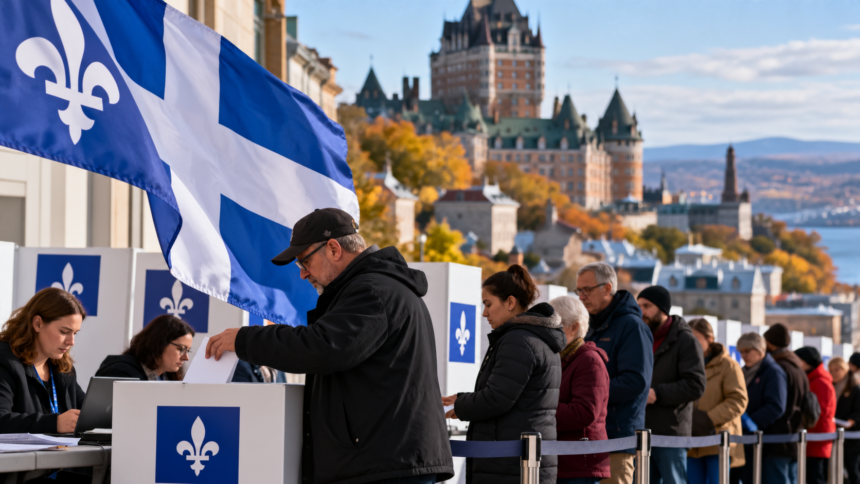
Quebec’s separatist Parti Québécois (PQ) has won the province’s election, returning to power after more than a decade and reopening the debate over Quebec’s future within Canada.
Led by Paul St-Pierre Plamondon, the PQ secured 59 of the 127 seats in Quebec’s National Assembly, five short of the 64 required for a majority. The result means the party will form a minority government and will need support from opposition lawmakers to pass major legislation.
The victory represents a dramatic comeback for the PQ, which held only three seats after the 2022 election. It also ends the Coalition Avenir Québec’s eight-year period in government, with voters largely choosing change after years of CAQ rule.
The election has immediately revived the question of Quebec independence. Plamondon has promised to hold another referendum on sovereignty during his first term, although he has said he would not pursue the vote while US President Donald Trump remains in office. Under his current position, that would mean waiting until after Trump leaves the White House in January 2029.
The result does not mean Quebec is leaving Canada. A referendum would still have to be organized, and voters would ultimately decide whether the province should become independent. Quebec has previously held sovereignty referendums in 1980 and 1995, with voters rejecting independence on both occasions.
Public support for independence remains relatively limited. Recent polling cited by political analysts puts support for sovereignty at about 30 percent, meaning the PQ faces a difficult task if it eventually seeks a third referendum.
The election also creates a new challenge for Canadian Prime Minister Mark Carney, who has repeatedly emphasized national unity. Carney congratulated Plamondon and said Ottawa would work with the incoming Quebec government on issues affecting the province, including economic pressures and support for workers and businesses.
The political situation could become even more sensitive because Alberta is scheduled to hold an independence-related vote later this month. The two developments have placed renewed attention on Canada’s national unity at a time when the country is also dealing with difficult relations and trade tensions with the United States.
For now, the PQ’s immediate challenge will be governing without a majority. The party must negotiate with opposition lawmakers while attempting to advance its economic, immigration and constitutional priorities.
The election therefore marks more than a change of government in Quebec. It has brought the country’s long-running debate over federalism and independence back into the political spotlight, creating a fresh test for Canada’s unity.