


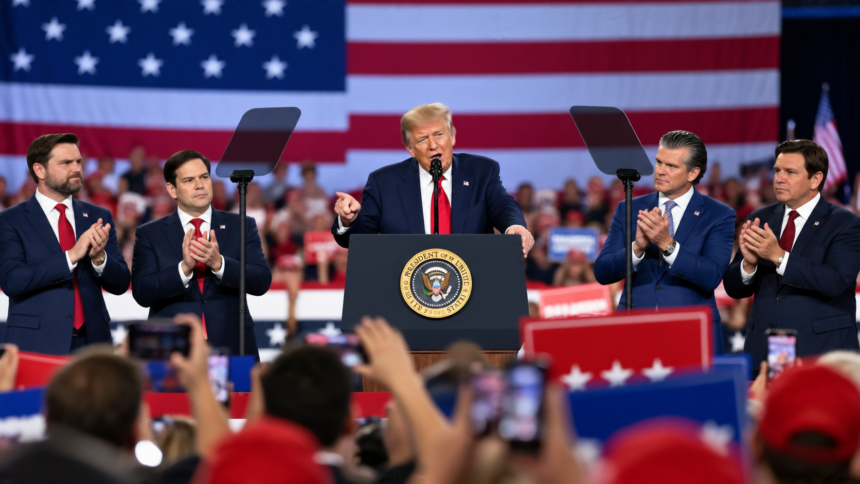
Republican candidates fighting for vulnerable seats in the upcoming U.S. midterm elections are increasingly trying to balance support for President Donald Trump with concerns about his political standing among voters.
A Reuters review of 62 competitive House and Senate races found that candidates in 41 contests have either disagreed with Trump on specific policies or reduced their public association with him. The shift comes less than a month before the November 3 midterm elections.
The strategy reflects a difficult political calculation for Republican candidates. Trump remains a powerful figure within the Republican Party and continues to command strong support from his core voters, but his broader approval ratings have weakened. A recent Reuters/Ipsos poll put his approval at 32%, while registered voters preferred Democratic candidates over Republicans by 44% to 37%.
Rather than openly breaking with the president, many Republican candidates have chosen narrower disagreements. Some have challenged administration policies involving Iran, beef imports and data-center development while continuing to support much of Trump’s wider political agenda.
The Iran conflict has become one of the most visible areas of disagreement. Reuters found that candidates in 12 competitive races have separated themselves from Trump over the issue, with some supporting efforts to restrict presidential war powers or calling for an end to the conflict as rising energy costs become an election concern.
Other Republicans are taking a less visible approach by reducing Trump’s presence in their campaign operations. Reuters found that at least a dozen candidates have removed Trump’s name, photographs or endorsements from campaign websites. Others have avoided Trump events or declined to say whether they want him campaigning alongside them.
The challenge is particularly clear in closely fought states. Senator Pete Ricketts of Nebraska, has criticized Trump’s proposal to increase beef imports but still appeared with the president at a campaign rally. Iowa Representative Mariannette Miller-Meeks has similarly disagreed with Trump on several issues while maintaining public ties with the administration.
Texas is another major test for Republicans. Trump is campaigning there for Republican Senate candidate Ken Paxton as Democrats mount an unusually competitive challenge in a state that has traditionally been a Republican stronghold. Reuters reported that Trump’s approval rating and concerns about the economy and fuel prices are complicating the Republican campaign.
Republicans also have a substantial financial advantage heading into the final stretch. Associated Press reporting says Republican-aligned groups have roughly $1 billion available for the midterm effort, but much of the spending came relatively late, potentially making advertising more expensive and limiting its impact.
For Republican candidates, the central question is becoming how much distance from Trump is enough. Moving too far away could anger his loyal supporters, while staying too closely aligned could make it harder to attract independent voters who are dissatisfied with the president.
The November elections will provide a major test of whether Republicans can protect their congressional power while navigating Trump’s continued influence over the party and growing concerns about his popularity among voters.