


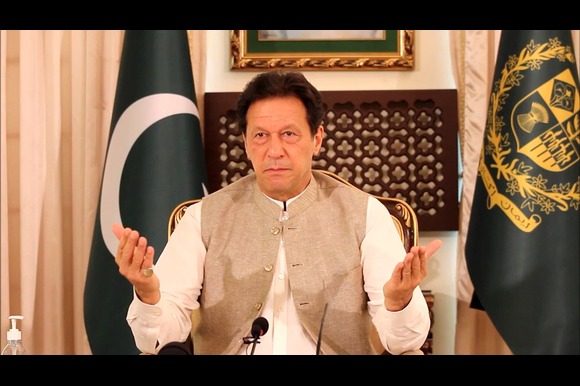
Islamabad / Rawalpindi, Pakistan — A special accountability court on Saturday, December 20, 2025, handed down a 17-year prison sentence each to former Pakistani Prime Minister Imran Khan and his wife, Bushra Bibi, after finding them guilty in a high-profile corruption case. The case centers on the alleged misappropriation and illegal sale of state gifts received during Khan’s tenure as prime minister.
The ruling was delivered by Special Judge Shahrukh Arjumand inside the Adiala Jail in Rawalpindi, where both Khan and Bibi are currently held on separate criminal charges. The court also imposed monetary fines of PKR 16.4 million for each, with additional imprisonment in case of non-payment.
Toshakhana Allegations
The case involves valuable gifts received by Khan from foreign dignitaries, particularly luxury watches and a Bulgari jewelry set from the Saudi government in 2021. Under Pakistani law, gifts received by officials in their official capacity are required to be deposited in the Toshakhana, a government repository, and cannot be sold or undervalued for personal gain.
Prosecutors argued that Khan and Bibi purchased these gifts at prices significantly lower than their market value and subsequently sold some for personal profit, violating provisions of the Pakistan Penal Code and the Prevention of Corruption Act.
The court ruled as follows:
- 10 years of rigorous imprisonment under Section 409 of the Pakistan Penal Code for criminal breach of trust.
- 7 additional years under the Prevention of Corruption Act, totaling 17 years.
- Fines of PKR 16.4 million each.
The judge acknowledged mitigating factors, such as Khan’s age and Bushra Bibi’s gender, which were considered in determining the length and nature of the sentences.
Political and Legal Context
Imran Khan, a former cricket captain and founder of the Pakistan Tehreek-e-Insaf (PTI) party, served as Pakistan’s prime minister from 2018 to 2022. He was removed from office in April 2022 following a no-confidence vote in Parliament. Since then, Khan has faced multiple corruption cases, with this being one of the most high-profile convictions.
Bushra Bibi, Khan’s spouse, is also serving sentences in other corruption-related cases. The latest verdict adds to the legal and political challenges facing the former prime minister, especially with upcoming national elections that could shape Pakistan’s political landscape.
Reactions and Next Steps
Khan and Bibi have denied all allegations, maintaining that the charges are politically motivated. Their legal team announced plans to appeal the verdict in higher courts, citing alleged procedural irregularities and lack of fair representation.
Government officials, however, defended the decision, stating that the ruling reflects a commitment to accountability and adherence to the law, emphasizing that public officials cannot misuse state resources.
The sentence has triggered strong reactions across Pakistan:
- Khan’s supporters argue the conviction is part of a political conspiracy to sideline him.
- Critics and anti-corruption advocates say the verdict demonstrates that no public figure is above the law, reinforcing the country’s anti-graft mechanisms.
Significance of the Toshakhana Case
This conviction is particularly significant because the Toshakhana cases have long been a litmus test for corruption accountability in Pakistan. The rulings set a precedent that even former heads of state can be prosecuted for misusing official privileges, signaling stronger enforcement of anti-corruption laws in the country.