
US President Donald Trump has said Washington intends to either retain or sell the crude oil aboard tankers seized off the coast of Venezuela, along with the vessels themselves, as the United States intensifies pressure on Venezuelan President Nicolás Maduro to relinquish power.
Speaking to reporters in Florida on Monday, Trump said the oil confiscated from the tankers would remain under US control. “We’re going to keep it,” he said, adding: “Maybe we will sell it, maybe we will keep it. Maybe we’ll put it into the Strategic Petroleum Reserve. We’re keeping the ships also.”
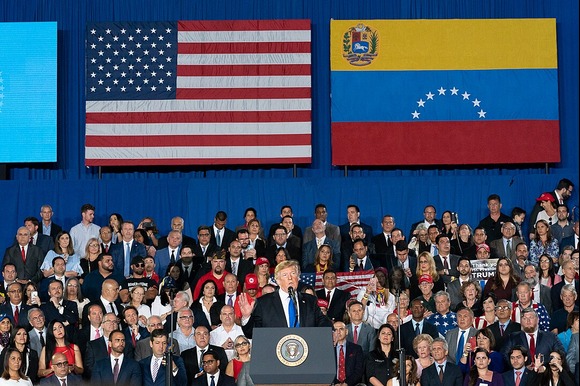
Trump’s remarks come amid an escalation in US efforts to isolate Caracas economically and militarily. The Trump administration has accused Venezuela’s government of using oil revenues to bankroll drug trafficking and organised crime, allegations that Venezuelan authorities have repeatedly denied. Caracas has condemned the seizures as acts of “piracy” carried out in international waters.
Earlier this month, US forces seized two oil tankers linked to Venezuela, including one intercepted on Saturday. Trump also confirmed that US authorities are pursuing a third vessel, which officials described as part of a Venezuelan “dark fleet” allegedly used to evade international sanctions.
“It’s moving along, and we’ll end up getting it,” Trump said, referring to the tanker still at sea.
Separately on Monday, the US military announced it had carried out a strike against what it described as a suspected trafficking vessel in international waters in the eastern Pacific Ocean. US Southern Command said one person was killed during the operation.
Asked whether the tanker seizures were intended to force Maduro from power, Trump suggested they could have that effect. “Well, I think it probably would,” he said. “That’s up to him what he wants to do. I think it’d be smart for him to do that. But again, we’re going to find out.”
The United States has significantly increased its military presence in the Caribbean and Pacific regions and has conducted a series of deadly operations against boats it claims are involved in Venezuelan drug trafficking. US military actions have reportedly resulted in the deaths of around 100 people in recent months.
However, Washington has not publicly released evidence to support claims that the targeted vessels were carrying narcotics, and the military campaign has drawn mounting scrutiny from members of the US Congress over the legality and proportionality of the strikes.
Trump also warned that US operations would soon expand beyond maritime actions. “We’ll be starting the same programme on land,” he said. “If they want to come by land, they’re going to end up having a big problem. They’re going to get blown to pieces, because we don’t want our people poisoned.”
In response, Maduro dismissed Trump’s remarks during a televised address, urging the US president to focus on domestic challenges. “He would be better off in his own country dealing with economic and social issues,” Maduro said, adding that “the world would be better off if he focused on his own country’s affairs.”
Since returning to office in January, Trump has intensified his campaign against Maduro, doubling the reward for information leading to the Venezuelan leader’s capture and accusing him of being “one of the largest narco-traffickers in the world.”
The Trump administration has formally designated Maduro’s government as a foreign terrorist organisation and last week ordered what it described as a “blockade” of sanctioned oil tankers entering or leaving Venezuelan ports.
Venezuela’s economy is heavily dependent on oil exports to fund public services and government operations, and the latest US measures have triggered outrage among officials in Caracas.
At Venezuela’s request, the United Nations Security Council is scheduled to hold an emergency meeting on Tuesday to discuss what the Venezuelan government has characterised as “ongoing US aggression.”