

Food assistance for millions of people in war-ravaged Sudan could be exhausted within months unless donors urgently commit hundreds of millions of additional dollars, the United Nations has warned.
As the conflict passes the grim milestone of more than 1,000 days, the UN World Food Programme (WFP) on Thursday appealed for $700m to sustain its humanitarian operations in Sudan. The agency said the funding is critical to prevent an already catastrophic hunger and displacement crisis — described as the worst in the world — from spiralling further out of control. Nearly three years of relentless fighting between Sudan’s military-led government and the paramilitary Rapid Support Forces (RSF) have killed tens of thousands of people and forced around 14 million from their homes.
Multiple international efforts to mediate an end to the war have failed to halt the violence. At the same time, humanitarian operations have been severely hampered by a steep decline in donor funding, driven in part by policy shifts under US President Donald Trump, as well as by competing demands from other major conflicts worldwide.
“WFP has been forced to cut food rations to the bare minimum required for survival,” Ross Smith, the organisation’s director of emergency preparedness and response, said in a statement. “By the end of March, our food stocks in Sudan will be completely depleted.”
“Without immediate new funding, millions of people could be left without lifesaving food assistance within weeks,” Smith added.
The $700m appeal, the WFP said, would allow it to continue delivering aid across Sudan until at least June.
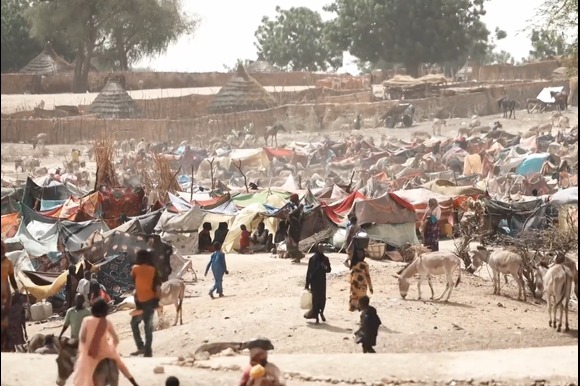
According to the agency, more than 21 million people — nearly half of Sudan’s population — are facing acute food insecurity. Famine has already been confirmed in some areas where prolonged fighting has made access for aid workers extremely difficult or impossible. During a visit to northern Sudan on Thursday, UN High Commissioner for Human Rights Volker Turk urged the international community to mount an “all-out effort” to support aid agencies so they can deliver the humanitarian assistance urgently required.
Diplomatic initiatives led by the United States and regional mediators — Egypt, Saudi Arabia and the United Arab Emirates, collectively known as the Quad — have so far failed to secure a ceasefire, as both the Sudanese government and the RSF continue battling for territorial control. Both sides have been accused of committing war crimes.
The RSF, in particular, has been linked to widespread atrocities in recent months, including indiscriminate killings and mass sexual violence, as it left devastation across Sudan’s western Darfur region and parts of central Kordofan following its withdrawal from the capital, Khartoum.
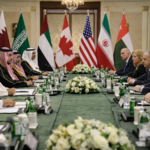
On Wednesday, officials from the Quad nations met in Cairo alongside representatives from the United Nations, the European Union and regional bodies in an attempt to reinvigorate stalled peace efforts.
However, negotiations aimed at brokering a ceasefire have been undermined by deep mistrust, with Sudan’s government accusing the UAE of backing the RSF. Abu Dhabi has strongly denied allegations that it is providing the paramilitary group with weapons or financial support.