

28 February 2026 — Middle East
Iran has launched a sweeping wave of missile and drone attacks across the Middle East in retaliation for coordinated strikes by the United States and Israel on senior Iranian leadership and key military installations, marking one of the most serious escalations in regional tensions in years.
The exchange of fire, which began in the early hours of Saturday, has raised fears of a broader regional conflict involving multiple states and armed groups aligned with either Tehran or Washington.
Coordinated US–Israel Strikes on Iranian Targets
According to U.S and Israeli officials, the initial operation targeted what they described as high-value military and command infrastructure inside Iran. Sites reportedly hit included facilities in and around Tehran, as well as strategic locations in Isfahan, Qom, Tabriz, and Kermanshah.
Officials in Washington stated the strikes were aimed at degrading what they called “imminent threats” linked to Iran’s military command structure and its regional proxy network. Israeli defence sources said dozens of targets were struck in a coordinated effort designed to disrupt command-and-control capabilities and limit Iran’s ability to project force beyond its borders.
Iranian authorities condemned the operation as an act of aggression and a violation of international law, vowing a decisive response.
Civilian Impact and Damage Reports
Iranian state media reported significant destruction in several urban areas. While U.S. and Israeli officials maintained that the strikes were focused on military infrastructure, Iranian outlets claimed that some civilian facilities were also damaged. Casualty figures remain unclear, with conflicting reports emerging from different sources.
Hospitals in major cities were reportedly placed on emergency footing, and authorities temporarily restricted airspace and communications in several provinces as assessments of the damage continued.
Iran’s Retaliation Across the Region
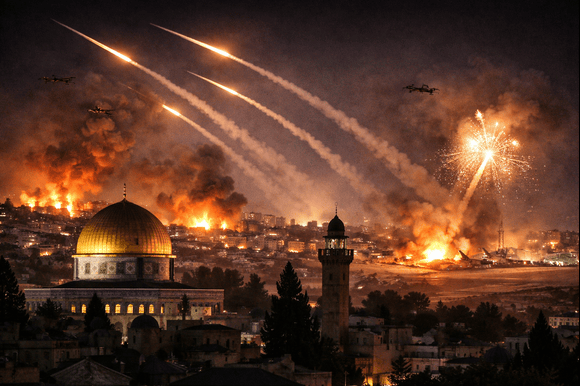
Within hours of the strikes, Iran launched what officials described as a “multi-front defensive response.” Ballistic missiles and armed drones were reportedly fired toward Israeli territory and toward locations hosting American military personnel.
In Israel, air raid sirens sounded across several cities as air defence systems intercepted incoming projectiles. Israeli authorities urged residents in affected areas to remain near shelters while the military assessed the scale of the attack.
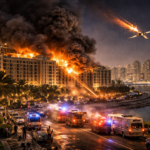
Iranian missiles were also reported to have targeted U.S.-linked installations and military facilities in Gulf states, including bases in Qatar, Kuwait, United Arab Emirates, and Bahrain. Several Gulf governments confirmed that air defence systems were activated, though details about damage or casualties were limited.
Iranian officials declared that American and Israeli military assets in the region would be considered legitimate targets for as long as hostilities continue.
International Reaction
The escalation has drawn swift international response. Governments across Europe and Asia called for immediate de-escalation, warning that further military action could destabilize energy markets and disrupt critical shipping lanes in the Gulf.
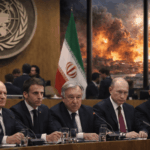
The United Nations urged all parties to exercise restraint and avoid civilian harm. Diplomats are reportedly working behind the scenes to prevent further deterioration of the security situation.
Global markets reacted nervously, with oil prices rising amid concerns over potential disruptions to supplies from the Gulf region.
Risk of Broader Conflict
Analysts warn that the confrontation risks spiraling into a wider regional war, particularly if allied armed groups aligned with Tehran become directly involved or if additional retaliatory rounds occur. The involvement of multiple states hosting foreign military forces further complicates efforts to contain the crisis.
Military forces across the region remain on heightened alert, and governments are preparing contingency plans for evacuation and civil defence should the conflict intensify.
For now, both sides appear to be signalling resolve while leaving open the possibility of further action — a volatile balance that has left the Middle East on edge.