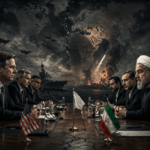


The American delegation, led by Vice President JD Vance, touched down in Pakistan on Friday, marking one of the most significant diplomatic engagements between Washington and Tehran in recent decades. Accompanying him are key figures, including special envoy Steve Witkoff and senior adviser Jared Kushner, both of whom have previously played roles in earlier negotiation efforts with Iran.
Their arrival comes shortly after confirmation that Iran’s delegation, headed by Parliament Speaker Mohammad Bagher Ghalibaf and Foreign Minister Abbas Araghchi, had already reached Islamabad. The presence of both delegations in Pakistan has fueled cautious optimism that diplomacy might succeed in stabilizing the fragile ceasefire announced earlier this week.
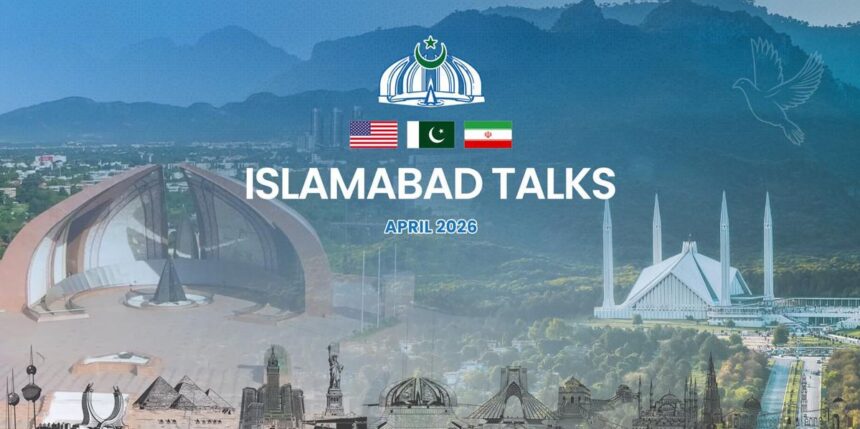
Pakistan’s role as host and mediator highlights its growing diplomatic significance in regional and global affairs. Following weeks of intensive backchannel diplomacy and engagement with multiple stakeholders, Islamabad was selected as the venue due to its working relationships with both Washington and Tehran.
To prepare for the high-profile talks, Pakistani authorities have implemented extensive security arrangements across the capital, particularly within the Red Zone, home to key government institutions and diplomatic missions. Thousands of security personnel have been deployed, roads have been closed, and public movement has been restricted to ensure the safety of visiting officials.
Government officials have described the talks as a decisive moment—not only for the continuation of the ceasefire but also for broader regional stability. The negotiations are expected to address several of the most contentious issues driving the conflict, including Iran’s nuclear programme, the easing of sanctions, and the reopening of the Strait of Hormuz—a vital global oil transit route.
The talks come just days after a two-week ceasefire temporarily halted hostilities involving the US, Israel, and Iran, averting what many feared could escalate into a full-scale regional war. However, despite the pause in direct confrontation, the truce remains highly fragile.
Disagreements have already surfaced regarding the terms of the ceasefire, particularly over whether it extends to Israel’s ongoing military operations in Lebanon. Iran has insisted that halting violence in Lebanon is a necessary condition for meaningful negotiations, while the US and Israel have maintained that this issue falls outside the scope of the agreement.
In addition, Tehran has called for the release of its frozen financial assets before formal negotiations begin, signaling a firm negotiating position that could complicate the process. These demands have raised concerns that talks could stall before substantive discussions even take place.
At the same time, tensions remain elevated across the region. Continued Israeli airstrikes in Lebanon, along with reports of drone activity in Gulf airspace, underscore the volatile security environment surrounding the negotiations.
Despite these challenges, US officials have expressed cautious optimism. Speaking prior to his departure, Vance stated that Washington remains open to constructive engagement, provided Iran approaches the talks in good faith.
“If the Iranians are willing to negotiate seriously, we are ready to extend an open hand,” he said, while also warning that the United States would not tolerate attempts to exploit the diplomatic process.
In contrast, US President Donald Trump has adopted a more hardline stance, emphasizing that the US is prepared for military escalation should negotiations fail. He has ordered military assets to remain on standby, highlighting the high stakes associated with the Islamabad talks.
The US negotiating team faces a delicate balancing act—applying pressure on Iran while keeping the door open for diplomacy. Analysts believe the outcome of these talks could significantly influence both regional security and the broader direction of US foreign policy in the Middle East.
Iran, for its part, has indicated readiness to engage in dialogue but insists that its core demands must be addressed. Officials in Tehran have framed the negotiations as an opportunity to secure long-term assurances, including sanctions relief and recognition of Iran’s strategic interests in the region.
However, Iranian leaders remain deeply skeptical of US intentions, citing previous failed negotiations and what they describe as repeated breaches of trust. This lingering mistrust continues to cast a shadow over the diplomatic process.
Iran’s strategic control over the Strait of Hormuz has also strengthened its position, providing leverage in negotiations as global energy markets remain sensitive to disruptions in the key shipping lane.
The Islamabad talks represent one of the highest-level direct engagements between the US and Iran in years, and their outcome could carry far-reaching consequences. A successful negotiation could pave the way for a broader agreement that stabilizes the region, restores energy flows, and reduces the likelihood of further conflict.
Conversely, failure could lead to rapid escalation, potentially drawing in additional regional and global powers. Analysts warn that a collapse in talks could have severe consequences, particularly given the already volatile situations in Lebanon and the Gulf.
For Pakistan, hosting these negotiations presents both an opportunity and a challenge. A successful outcome would enhance its global standing as an effective mediator, while failure could expose the country to diplomatic and security risks.
As both sides prepare to enter negotiations, the world is watching closely. With deep divisions still unresolved and tensions continuing to simmer, the path toward peace remains uncertain—but the stakes could hardly be higher.