


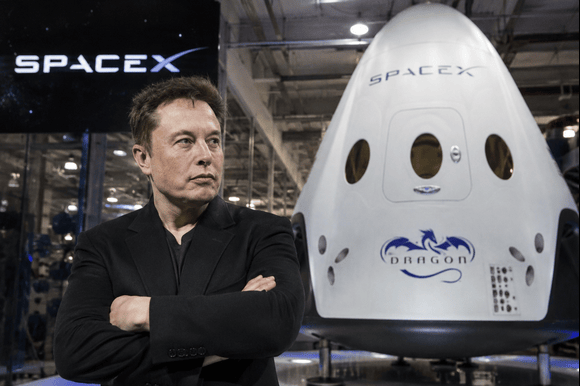
New York, June 25, 2026 — Technology entrepreneur and billionaire investor Elon Musk has lost his status as the world’s first trillionaire less than two weeks after reaching the historic milestone, following a sharp decline in the market value of his key business holdings amid a broader sell-off in technology stocks.
According to the latest figures from the Bloomberg Billionaires Index, Musk’s net worth stood at approximately $957 billion (£727 billion) as of Tuesday evening, a significant drop from the $1.11 trillion valuation recorded less than fourteen days earlier. Despite the decline, Musk remains comfortably the wealthiest individual on the planet, maintaining a substantial lead over other members of the global rich list.
The reversal comes after investors pulled back from some of the market’s most highly valued technology companies amid growing concerns about the future profitability of artificial intelligence investments, escalating infrastructure costs, and the impact of persistently high interest rates on growth-oriented businesses.
Musk first entered the trillionaire club on June 12 following the long-awaited public debut of his aerospace company, SpaceX. The company’s initial public offering (IPO) was among the most anticipated stock market events in recent years and attracted enormous interest from institutional and retail investors alike.
SpaceX shares were priced at $135 before trading began on the Nasdaq exchange but opened at $150, reflecting strong demand from investors eager to gain exposure to the rapidly expanding space technology sector. The successful listing immediately valued the company at more than $1.77 trillion, making it one of the most valuable corporations in the world.
Because Musk retained an ownership stake of approximately 42% in SpaceX, the public offering dramatically increased the value of his personal holdings. The listing instantly pushed his net worth beyond the $1 trillion mark, making him the first individual in history to achieve the milestone.
Investor enthusiasm continued to build in the days that followed. By June 16, SpaceX shares had surged to a record high of $225.64, lifting Musk’s fortune to an estimated peak of $1.32 trillion. Analysts at the time suggested that continued optimism surrounding commercial space travel, satellite communications, and artificial intelligence-linked technologies was fuelling the rally.
However, the momentum proved short-lived as financial markets began reassessing the lofty valuations attached to many technology companies. Investors increasingly questioned whether the massive spending required to build and maintain artificial intelligence infrastructure could generate returns sufficient to justify soaring stock prices.
The resulting market correction affected a wide range of major technology firms. Several industry leaders, including Nvidia, Intel, and AMD, experienced notable declines as investors shifted away from high-growth assets and sought safer investments amid economic uncertainty.
SpaceX was among the hardest-hit companies during the downturn. The stock fell by more than 30% from its mid-June peak, sliding to approximately $156 per share. The decline wiped hundreds of billions of dollars from the company’s market value and significantly reduced Musk’s personal wealth.
One of the most dramatic moments came on Monday, June 22, when SpaceX shares plunged 16% in a single trading session. The sharp drop erased an estimated $240 billion from Musk’s fortune in just one day, highlighting the extraordinary volatility associated with highly valued growth stocks.
The losses were compounded by weakness in Tesla shares. The electric vehicle manufacturer, which represents the second-largest component of Musk’s wealth, fell nearly 6% the following day as investors continued selling technology stocks across multiple sectors.
Musk currently owns roughly 12% of Tesla, meaning fluctuations in the company’s share price have a direct impact on his overall net worth. Combined with the decline in SpaceX shares, the fall in Tesla added further pressure to his financial standing.
Financial experts note that Musk’s wealth is particularly sensitive to market swings because of its unusually concentrated structure. Unlike many of the world’s richest individuals, whose fortunes are spread across a variety of industries and investments, the overwhelming majority of Musk’s wealth is tied to the performance of just two companies.
SpaceX alone accounts for nearly 80% of his total fortune, while Tesla represents most of the remainder. As a result, even relatively modest changes in the market value of either company can translate into enormous shifts in Musk’s personal wealth.
Market analysts say the recent volatility is not unusual following a major stock market debut, especially for a company carrying an exceptionally high valuation. Nevertheless, they acknowledge that the scale of the price movements reflects a broader struggle between investor optimism and underlying business fundamentals.
Danni Hewson, Head of Financial Analysis at AJ Bell, said that excitement surrounding the future of space exploration may have encouraged some investors to make decisions based more on expectations than financial realities. She noted that while the long-term potential of companies such as SpaceX remains significant, successful investing ultimately requires discipline, patience, and careful assessment of risk.
Analysts are also watching upcoming changes to insider trading restrictions related to the SpaceX flotation. Lock-up agreements that currently prevent company executives and early investors from selling large portions of their holdings are scheduled to begin easing in late July.
Once those restrictions are lifted, insiders will be permitted to sell shares in stages, a development that could place additional pressure on the stock price if substantial numbers of investors decide to realise gains following the company’s remarkable market debut.
Despite falling below the trillion-dollar threshold, Musk’s return to trillionaire status may not be far away. Market estimates suggest that a relatively modest recovery of around 6% in SpaceX shares would be sufficient to push his net worth back above $1 trillion.
For that reason, some analysts believe Musk’s departure from the trillionaire club could prove temporary. If market conditions improve and investor confidence returns, the Tesla and SpaceX chief executive may once again reclaim the historic title, potentially becoming the world’s first recurring trillionaire.
While the recent decline underscores the risks associated with concentrated wealth and volatile technology stocks, it also highlights the unprecedented scale of Musk’s financial empire, which remains unmatched despite one of the largest personal wealth reversals ever recorded in modern market history.