

Caracas, June 25, 2026 — Venezuela is facing a major humanitarian and infrastructure crisis after two strong earthquakes struck the country in quick succession, causing extensive destruction, claiming dozens of lives, and injuring hundreds more. Emergency crews continue to search through collapsed buildings as authorities warn that the number of casualties could increase in the coming days.
The earthquakes occurred on Wednesday evening, with seismic monitoring agencies reporting a magnitude 7.2 tremor followed less than a minute later by a stronger 7.5-magnitude quake. The epicenters were located west of Caracas, but the shaking was felt across much of Venezuela, sending residents rushing from homes, offices, and public buildings.
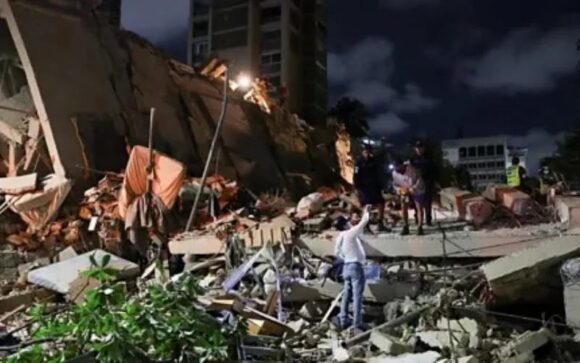
Officials have confirmed at least 32 deaths and more than 700 injuries, although rescue workers say the figures remain preliminary. Search teams, supported by firefighters, police, military personnel, and volunteers, are working around the clock to locate people believed to be trapped beneath collapsed structures. Several neighborhoods in the capital and surrounding regions suffered significant damage, with apartment buildings, homes, and commercial properties either partially or completely destroyed.
Hospitals in affected areas have been inundated with injured residents, prompting authorities to activate emergency response plans and deploy additional medical staff. Temporary treatment centers have also been established to assist healthcare facilities struggling to cope with the surge of patients.
The strongest impact was reported in Caracas and nearby states, where roads cracked, utility lines were damaged, and sections of key infrastructure suffered structural failures. Authorities temporarily halted operations at Simón Bolívar International Airport after inspections revealed damage to parts of the facility. Public transportation services also experienced disruptions as engineers assessed the safety of rail lines, stations, and other transport networks.
In response to the disaster, Acting President Delcy Rodríguez declared a nationwide state of emergency and announced the mobilization of national resources to support rescue and recovery efforts. Government agencies have urged residents to avoid damaged buildings and remain alert for possible aftershocks, which experts say could continue for days or even weeks.
Power outages and communication interruptions have complicated rescue operations in several regions. Emergency officials have been working to restore essential services while coordinating relief efforts for thousands of displaced residents. Many families spent the night outdoors in parks, open spaces, and temporary shelters, fearful that additional tremors could bring down already weakened structures.
Seismologists have described the event as an unusual earthquake doublet, a phenomenon in which two major earthquakes occur within a very short time span. Experts note that such events can be especially destructive because buildings weakened by the first shock may collapse when the second quake strikes. Preliminary assessments suggest that the combination of the two powerful tremors significantly increased the overall level of damage.
International organizations and foreign governments have begun offering assistance to Venezuela. Several countries have pledged emergency aid, rescue equipment, medical supplies, and specialized response teams to help local authorities manage the disaster. Humanitarian agencies are also preparing to provide support for displaced families and communities affected by the earthquakes.
Scientists continue to monitor seismic activity in the region. Venezuela is located in a tectonically active zone where the Caribbean and South American plates interact, making earthquakes a recurring risk. However, experts say earthquakes of this magnitude are uncommon and rank among the most powerful recorded in the country in recent decades.
As rescue efforts continue, authorities remain focused on locating survivors, restoring essential services, and assessing the full extent of the damage. With many communities still cut off and emergency operations ongoing, the true scale of the disaster may not become clear until the coming days.