


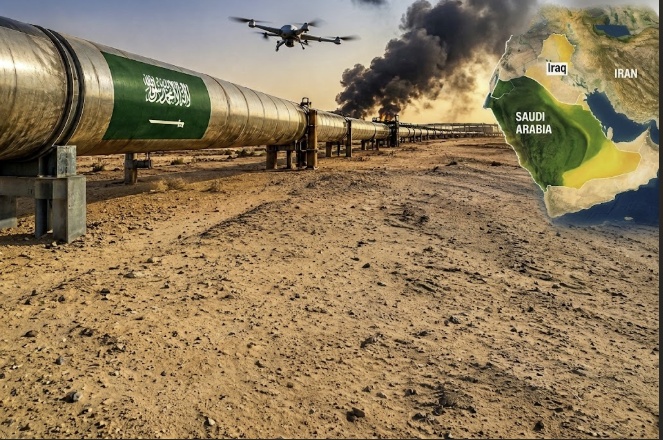
Saudi Arabia has temporarily shut a major oil pipeline after a drone attack originating from Iraq caused damage and injuries, adding to growing concerns over the security of energy infrastructure and shipping routes across the Middle East.
Saudi authorities announced the closure of the 1,200-kilometre East-West pipeline as a precaution after drones struck the facility. The pipeline is strategically important because it allows Saudi Arabia, the world’s largest crude oil exporter, to transport oil without relying entirely on the Strait of Hormuz.
The attack has also triggered a response from Iraq. Iraqi authorities acknowledged that the drones were launched from Maysan province, which borders Iran, and said the military commander responsible for operations in the area had been removed from his position. Baghdad has also opened an investigation into the incident.
Saudi Arabia’s Foreign Ministry said the attack caused injuries and damage, although officials were still assessing the full extent of the impact. Satellite imagery showing scorched areas and smoke around the reported strike location emerged as Riyadh announced the pipeline shutdown.
According to figures cited by Reuters from shipping-tracking companies and analysts, the pipeline has been carrying an estimated 4% to 5% of global oil supplies. Any prolonged disruption could therefore create additional uncertainty for international energy markets.
Despite the attack, Saudi Arabia has so far decided against retaliatory action. Riyadh said the decision followed a request from Iraq’s prime minister and that the kingdom would support Baghdad’s efforts to prevent attacks launched from Iraqi territory against neighbouring countries.
Saudi officials nevertheless warned that the kingdom reserves the right to take measures necessary to protect its sovereignty, infrastructure, citizens and residents if its security continues to be threatened.
The incident comes at a particularly sensitive moment for regional energy security. Iranian-backed Houthi forces in Yemen have reportedly made significant advances, creating additional pressure around important maritime routes. The wider conflict has already placed international oil transportation under increased strain.
The Bab al-Mandab Strait, an important passage connecting the Red Sea with the Suez Canal, is also part of the growing regional security concern. The Houthis have claimed control over the area while saying that maritime traffic remains safe for companies other than those operating Saudi vessels.
The Gulf Cooperation Council, which includes the United Arab Emirates, Bahrain, Oman, Qatar, Kuwait and Saudi Arabia, condemned the drone attack. GCC Secretary General Jasem Mohamed Albudaiwi described the incident as a serious escalation and a threat to Saudi Arabia’s security, territorial integrity and vital infrastructure.
The attack therefore adds another layer of uncertainty to an already volatile regional situation. With oil infrastructure and major shipping corridors facing increased security risks, governments and energy markets will be closely watching whether the pipeline can safely resume operations and whether further attacks occur.