


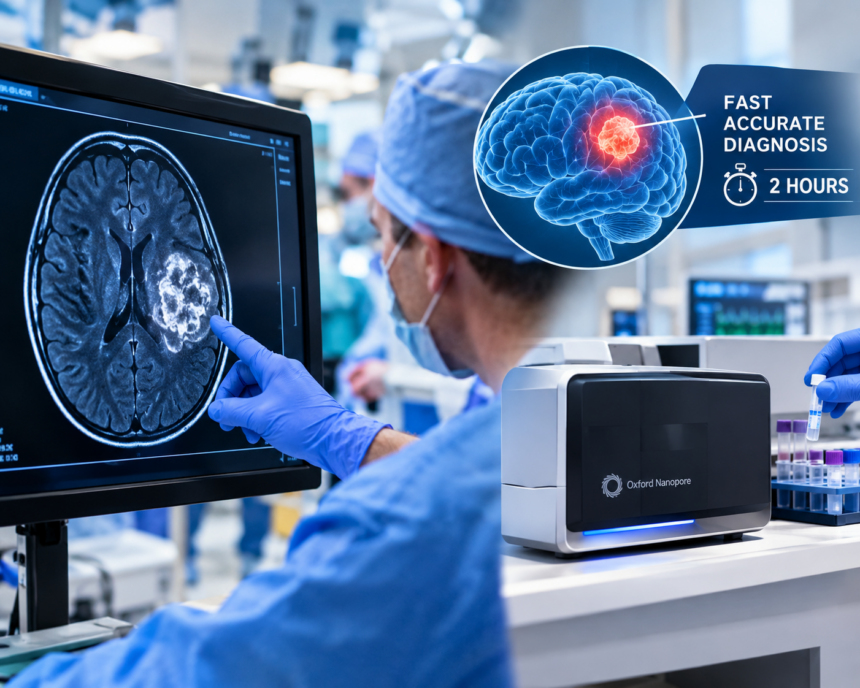
A new rapid genomic test being introduced by the NHS could dramatically reduce the time needed to identify different types of brain tumours, potentially cutting the wait for a detailed diagnosis from several weeks to just a few hours.
The technology analyses the genetic characteristics of tumour tissue and can provide doctors with important information while a patient is still undergoing surgery. NHS England is piloting the approach at specialist centres in England as part of efforts to speed up cancer diagnosis and treatment.
Faster Answers During Surgery
One patient to benefit from the technology is 55-year-old Steve Palmer from Nottingham. After collapsing at a gym, Palmer was diagnosed with a brain tumour and underwent surgery at Queen’s Medical Centre.
During the operation, a small sample of his tumour was analysed using rapid genomic sequencing. The initial results indicated that the tumour was a grade 4 glioblastoma, giving doctors valuable information before the surgery had even finished.
Palmer said receiving the diagnosis quickly helped remove weeks of uncertainty and allowed him to focus on the next stage of treatment and recovery.
How the Technology Works
The test uses small samples taken from the tumour, which are prepared for analysis in a sequencing machine. The system uses nanopore technology to examine DNA and identify a tumour’s distinctive genetic characteristics.
The equipment can begin producing useful information within minutes. In Palmer’s case, the neuropathology team contacted the operating theatre after around 20 minutes to report that the tumour was likely to be a glioblastoma.
The rapid genomic approach provides doctors with molecular information that may be difficult to establish quickly through traditional examination of tumour cells under a microscope.
Could Change Surgical Decisions
Knowing the tumour type during an operation could also affect how surgeons approach the procedure.
Some brain tumours may benefit from removing as much of the tumour as safely possible. In other cases, surgeons may need to balance tumour removal against the possibility of damaging healthy brain tissue.
Consultant neurosurgeon Stuart Smith, who led Palmer’s operation, said rapid molecular information could therefore influence surgical decisions while the procedure is still taking place.
The technology could also allow eligible patients to reach clinical trials more quickly because doctors can obtain a more detailed genetic profile of their tumour sooner.
NHS Expands the Pilot
NHS England’s genomic medicine programme has been developing the use of advanced sequencing technologies for cancer diagnosis, including research into long-read sequencing and its potential application to brain tumours.
The new pilot involves specialist centres in Nottingham, Birmingham, London and Newcastle. The participating organisations include Nottingham University Hospitals NHS Trust, University Hospitals Birmingham NHS Foundation Trust, Great Ormond Street Hospital NHS Foundation Trust, King’s College Hospital and Newcastle Hospitals NHS Foundation Trust.
The programme is expected to expand to additional locations, including Bristol, Oxford, Leeds and Manchester.
NHS England’s wider genomic service already operates through a national network of genomic laboratory hubs, which provide testing and interpretation services across England.
A Potential Shift in Brain Tumour Care
There are many different types of brain tumour, with some growing slowly and others behaving much more aggressively. Because different tumour types can respond differently to treatment, identifying the precise molecular characteristics can be important when planning a patient’s care.
NHS England’s genomic testing framework is designed to make genomic information available when it is expected to influence clinical management or treatment decisions.
For patients and their families, the potential benefit of the rapid test goes beyond speed. Earlier molecular information could help doctors determine treatment pathways sooner, reduce uncertainty and, in selected cases, provide information that can influence surgery itself.
The NHS pilot will now help establish how consistently the technology can be used in routine clinical settings and whether rapid genomic diagnosis can become a wider part of brain tumour care.