


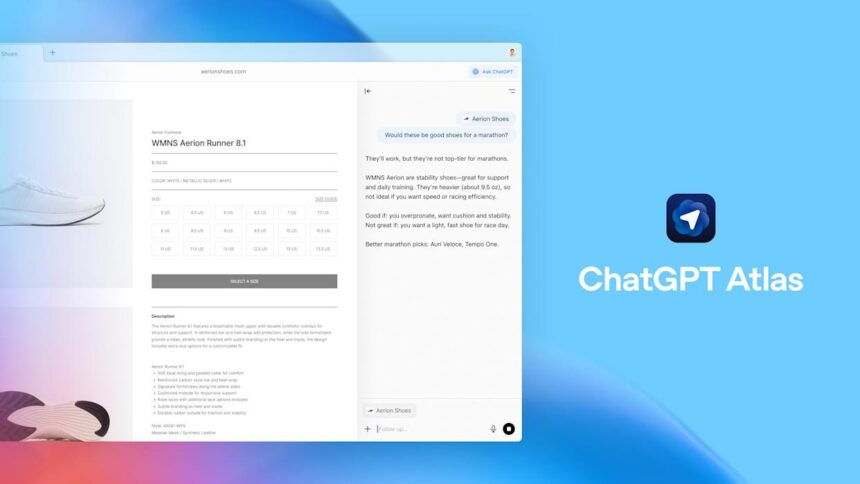
New AI-Driven Browser Built Around ChatGPT
ChatGPT-maker OpenAI has unveiled an artificial intelligence-powered web browser aimed at rivaling industry giants like Google, which operates Chrome, the world’s most widely used browser.
The new browser, called ChatGPT Atlas, eliminates the traditional address bar — a core feature of most browsers — and instead integrates search directly into ChatGPT’s conversational interface. OpenAI CEO Sam Altman described Atlas as “built around ChatGPT,” saying the product became available for Apple’s macOS users on Tuesday.
Part of OpenAI’s Broader Push to Monetise AI
The launch of Atlas marks OpenAI’s latest effort to capitalise on its rapidly growing user base and expand its monetisation strategy for artificial intelligence technologies. The company said the browser will feature a paid “agent mode”, which allows ChatGPT to conduct searches autonomously on behalf of users.
The agent mode will be available exclusively to paying ChatGPT subscribers. According to OpenAI, it enables the chatbot to “make improvements that make it faster and more useful by working with your browsing context.”
The company has also been building partnerships with major online platforms, including Etsy, Shopify, Expedia, and Booking.com, to drive more users toward its services and integrate AI-powered features into e-commerce and travel booking experiences.
Rapid Growth and User Adoption
At OpenAI’s DevDay event earlier this month, Altman revealed that ChatGPT had reached 800 million weekly active users, a dramatic increase from 400 million in February, according to figures from data analytics firm Demandsage.
“I believe that early adopters will kick the tyres on the new OpenAI browser,” said Pat Moorhead, CEO and chief analyst at Moor Insights & Strategy. However, Moorhead cautioned that Atlas might face an uphill battle against entrenched browsers like Google Chrome and Microsoft Edge, saying that “mainstream, beginner, and corporate users will likely wait for their favourite browsers to offer similar capabilities.”
He noted that Microsoft’s Edge browser already includes several comparable AI-powered features today.
A Challenge to Google Amid Antitrust Scrutiny
OpenAI’s move comes at a time when Google is under intense regulatory pressure in the United States. Just a year ago, the tech giant was found to be an illegal monopolist in online search, though a recent US court decision stopped short of ordering the company to divest its Chrome browser — a remedy sought by the Justice Department.
With the emergence of AI-driven browsing, OpenAI’s Atlas could present a fresh challenge to Google’s long-held dominance in web search and navigation.
Shift Toward AI-Powered Search
A growing number of internet users are now turning to large language models (LLMs) such as ChatGPT for answers, recommendations, and information searches.
According to research firm Datos, as of July, 5.99% of all desktop browser searches were conducted through LLMs — more than double the proportion recorded a year earlier. The trend reflects a gradual shift away from traditional keyword-based search engines.
Meanwhile, Google has been doubling down on AI innovation, integrating AI-generated responses directly into its search results and prioritising generative features over conventional search listings throughout the past year.
The Future of Browsing
Industry experts say OpenAI’s Atlas represents a bold step toward redefining how people access and interact with information online. Whether it can disrupt entrenched user habits remains to be seen, but its integration of ChatGPT into the browsing experience signals a potential turning point in the evolution of the internet itself.