

China has launched large-scale military drills around Taiwan, simulating the seizure and blockade of key areas of the island, in what Beijing described as a warning to “separatist forces”.
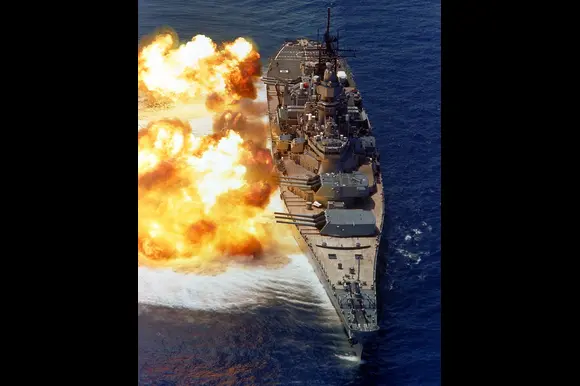
China’s army, navy, air force and rocket force have all been mobilised for the exercises, which include live-fire drills, according to a statement from the Chinese military.
The drills, codenamed “Justice Mission 2025”, come just days after the United States announced one of its largest-ever weapons sales to Taiwan, valued at $11bn (£8.2bn). Beijing strongly condemned the move and responded by imposing sanctions on several US defence companies.
China has also expressed anger over Taiwan’s efforts this year to significantly strengthen its defence capabilities. Beijing claims the democratically governed island as its own territory, despite Taiwan operating as a self-ruled entity. Taiwan’s presidential office criticised the planned Chinese drills, calling them a challenge to international norms and regional stability.
Taiwan’s defence ministry said it detected Chinese aircraft and naval vessels operating around the island early on Monday morning. In response, Taiwan deployed its own forces and missile systems to closely monitor developments. The ministry said its military remains on “high alert” to defend the island and “protect our people”.
In a post on Chinese social media platform Weibo, the People’s Liberation Army’s Eastern Theater Command, which oversees operations in the Taiwan Strait, described the exercises as a “shield of justice”.
“Anyone plotting independence will be annihilated when confronted by this shield,” the post warned.
Although some initial activities have already begun, the Chinese military said a major phase of the drills would take place from 08:00 to 18:00 local time on Tuesday.
China’s foreign ministry described the exercises as a “severe punishment for separatist forces seeking independence through force” and issued a warning to what it called “external forces” against “using Taiwan to contain China”.
“Any sinister attempts to obstruct China’s reunification are doomed to fail,” foreign ministry spokesperson Lin Jian said during a regular press briefing on Monday.
While Beijing maintains it seeks “peaceful reunification” with Taiwan, Chinese law also allows the use of “non-peaceful means” if necessary to prevent what it describes as the island’s “secession”.
China has repeatedly accused Taiwan’s President Lai Ching-te of pursuing independence. Lai, however, insists Taiwan is already a sovereign nation and therefore has no need to formally declare independence.
In a televised interview on Sunday, Lai said Taiwan must “continue raising the difficulty so [China] can never meet the standard” for launching an invasion. He also said his government was committed to “maintaining the status quo” and would not provoke Beijing, but stressed that peace ultimately depends on “real strength”.
Opinion polls consistently show that most people in Taiwan favour maintaining the status quo — neither unifying with China nor declaring formal independence. Since 2022, Beijing has significantly increased military activity in the Taiwan Strait, often in response to events it considers provocative, such as former US House Speaker Nancy Pelosi’s visit to Taiwan that year and Lai’s inauguration in 2024.
China’s most recent live-fire drills in the Taiwan Strait, conducted in April, simulated strikes on critical ports and energy infrastructure, according to the People’s Liberation Army. During those exercises, the Chinese military also released a series of cartoons portraying Lai as a “parasite”.
This week’s drills are the first to be held under Yang Zhibin, the newly appointed commander of the Eastern Theater Command, who assumed his role in October.
Taiwan regularly conducts its own military exercises, aimed both at preparing its population for a potential attack and demonstrating its defensive capabilities to Beijing. This year’s Han Kuang exercises, which lasted 10 days, were the largest and longest ever staged by Taiwan.
Since taking office, Lai has pledged to increase defence spending and strengthen Taiwan’s military capabilities amid growing tensions with China. In October, he announced plans to build a dome-like air defence system to protect against “hostile threats”, without explicitly naming China.
China’s military said the current drills are also intended to deter forces “outside the island chain”, a phrase widely interpreted as referring to the United States and its allies.
Meanwhile, China’s relations with Japan have deteriorated sharply in recent months. Tensions escalated after Japanese Prime Minister Sanae Takaichi suggested last month that Japan’s self-defence forces could intervene if China were to attack Taiwan.
Beijing has lodged strong protests and issued travel warnings to its citizens about visiting Japan. Earlier this month, Tokyo accused Chinese fighter jets of locking radar systems onto Japanese aircraft, while China countered by accusing Japan of “harassing” its forces during a military training exercise.