


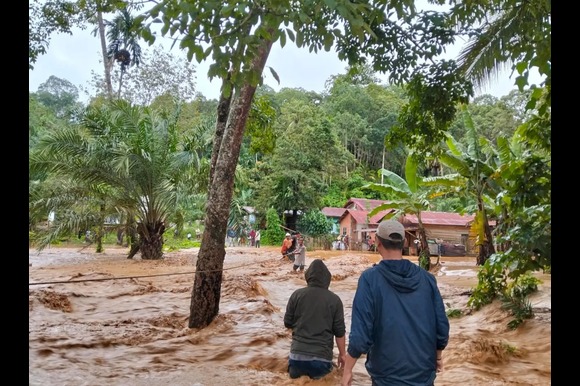
Indonesia’s Devastating Floods
In late November 2025, Indonesia was struck by one of the worst natural disasters the region has seen in decades. Relentless monsoon rain—supercharged by an abnormal tropical system forming in the Malacca Strait—unleashed massive floods and deadly landslides across Sumatra, particularly in North Sumatra, West Sumatra and Aceh. Rivers burst their banks, hillsides collapsed, and entire communities vanished beneath walls of water and mud.
Bridges, roads, and communication lines were destroyed in moments, leaving many areas completely isolated. With the land routes gone, survivors in remote districts waited helplessly, hoping rescuers could reach them through the rising waters.
The Human Toll
By early December, the scale of the disaster had become painfully clear:
- More than 600 people have been confirmed dead, with the toll expected to rise.
- Hundreds are still unaccounted for, feared buried under landslides or swept out to sea.
- Hundreds of thousands have been displaced, taking refuge in makeshift shelters or temporary camps.
- Entire villages were submerged, with homes, schools, and farms wiped out in hours.
Survivors described the floodwaters as “a force strong enough to kill an elephant,” recalling how families were torn apart within seconds. Many escaped with nothing but the clothes they were wearing.
In places cut off from aid, residents scavenged for food and safe drinking water. Some even resorted to desperate measures simply to survive, highlighting how critical the situation had become.
Stories of Loss and Survival
The disaster struck with terrifying speed. Heavy rain fell for days, but few expected the collapse of entire hillsides or floodwaters rising as fast as they did. People fled through the night carrying children, elderly family members, and whatever possessions they could hold.
Some families have been separated, with loved ones still missing. Others returned to find their homes carried away, livestock drowned, and fields destroyed. In areas hit by landslides, houses were found crushed under meters of mud.
For many, the emotional trauma is as severe as the physical destruction. Long after the waters recede, the memories of sweeping currents, sudden darkness, and screams in the night will remain.
Relief Efforts Under Pressure
Indonesia’s national disaster agency, army, and volunteers launched massive rescue operations. But damaged infrastructure turned relief efforts into a race against time.
- Helicopters and naval ships became essential for reaching cut-off towns.
- Emergency shelters overflowed as more evacuees arrived daily.
- Clean water, food, medicine, and blankets became increasingly scarce.
- Clearing debris to reopen roads proved slow and dangerous.
Frustration grew among survivors who waited days for help, and questions rose about whether authorities were adequately prepared for a disaster of this scale.
Understanding the Bigger Picture
Experts warn that this catastrophe is not an isolated event. Instead, it may be part of a growing pattern linked to climate change, deforestation, and unregulated development.
Warmer seas intensify storms and alter monsoon patterns. At the same time, deforested slopes and poorly planned settlements make communities far more vulnerable to floods and landslides.
Unless stronger measures are taken—improved early-warning systems, stricter land-use rules, flood-resistant infrastructure, and climate-adaptation planning—events like this may become more frequent and more devastating.
A Nation in Mourning, A Long Road Ahead
As Indonesia continues rescue and recovery efforts, the full extent of the destruction is still unfolding. For thousands of families, life has changed forever. Homes must be rebuilt, livelihoods restored, and communities supported through both physical and emotional healing.
But even amid tragedy, stories of resilience shine through—neighbours saving neighbours, volunteers risking their lives, and communities coming together to support one another.
The 2025 floods will be remembered not only for their destruction, but for the strength and solidarity shown in the face of overwhelming loss.