


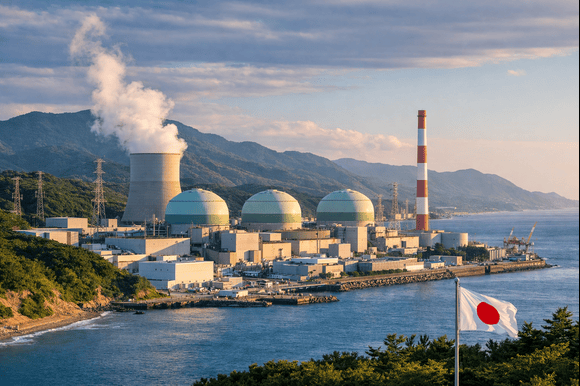
Japan is preparing to restart operations at Kashiwazaki-Kariwa, the world’s largest nuclear power plant, following a key decision by local authorities that clears the way for a partial resumption of activity.
The move was approved on Monday after Niigata’s prefectural assembly passed a vote of confidence in Governor Hideyo Hanazumi, who had formally endorsed the restart last month. The vote effectively removed the final political obstacle at the local level, allowing preparations for reopening the facility to move forward.
The decision marks another significant step in Japan’s gradual return to nuclear power, nearly 15 years after the country shut down all 54 of its reactors in the aftermath of the Fukushima nuclear disaster. Despite persistent public opposition, successive governments have argued that nuclear energy is essential to cutting carbon emissions and ensuring a stable power supply.
The 2011 Fukushima crisis, triggered by a powerful earthquake and tsunami that caused a triple meltdown, severely damaged public confidence in Japan’s nuclear industry and led to widespread evacuations. Trust in nuclear safety has remained fragile ever since.
However, the high economic and environmental costs of Japan’s heavy dependence on imported fossil fuels have driven a policy shift under the country’s new Prime Minister, Sanae Takaichi, who has supported reopening selected nuclear facilities to improve energy security and reduce greenhouse gas emissions.
To date, 14 of the 33 nuclear reactors that remain technically operable across Japan have been brought back online. Kashiwazaki-Kariwa is particularly significant because it is the first nuclear plant to be restarted under the management of Tokyo Electric Power Company (TEPCO), the operator responsible for the Fukushima Daiichi plant.
According to Japan’s public broadcaster NHK, TEPCO is considering restarting the first of Kashiwazaki-Kariwa’s seven reactors as early as January 20. Government estimates suggest that a single reactor at the facility could increase electricity supply to the greater Tokyo area by about two percent, providing a notable boost to the country’s power grid.
While the prefectural assembly ultimately backed Governor Hanazumi, the debate during the session highlighted deep divisions within the local community. Supporters of the restart point to the potential for job creation, economic stimulus and lower electricity prices, while opponents remain deeply concerned about safety risks.
Around 300 demonstrators gathered outside the assembly to protest against the decision, holding placards reading “No Nukes”, “We oppose the restart of Kashiwazaki-Kariwa” and “Support Fukushima”.
Among the protesters was 52-year-old farmer and anti-nuclear activist Ayako Oga, who relocated to Niigata after fleeing the area surrounding the Fukushima plant in 2011. She was among approximately 160,000 people forced to evacuate, and her former home lay within the 20-kilometre (12-mile) exclusion zone established after the disaster.
“We know from direct experience the risks that come with a nuclear accident, and those dangers cannot simply be dismissed,” Oga said. She added that she continues to suffer from symptoms similar to post-traumatic stress disorder more than a decade after the disaster.
Prime Minister Takaichi, who assumed office two months ago, has made nuclear restarts a key element of her energy policy, arguing they are necessary to strengthen national energy security and curb Japan’s reliance on imported fuels that also drive climate change.
Japan spent an estimated 10.7 trillion yen (about $68 billion) last year importing liquefied natural gas and coal, accounting for roughly one-tenth of the country’s total import costs. Government officials say reviving nuclear power could help ease that financial burden while supporting Japan’s climate goals.