


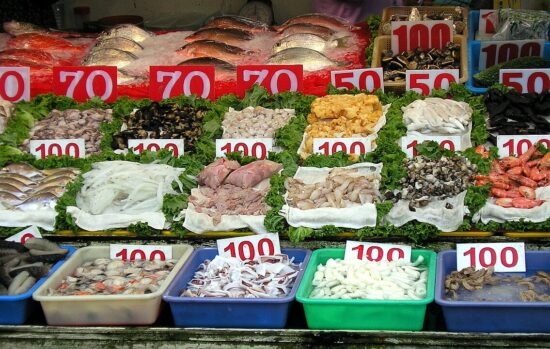
China is set to once again ban all imports of Japanese seafood as diplomatic tensions between Beijing and Tokyo escalate, according to reports from Japanese media outlets.
Japanese public broadcaster NHK and Kyodo News agency reported on Wednesday that the renewed seafood ban comes shortly after China lifted import restrictions on Japanese marine products earlier this month. These restrictions were initially imposed by Beijing in 2023, following Japan’s controversial release of treated radioactive water from the damaged Fukushima nuclear plant into the Pacific Ocean. Kyodo News, citing sources familiar with the matter, stated that China informed Japan the reintroduction of the ban was necessary for continued monitoring of the Fukushima water discharged into the ocean.
However, the latest ban occurs amid a broader deterioration in China-Japan relations, triggered by remarks from Japanese Prime Minister Sanae Takaichi. Speaking in parliament on November 7, Takaichi stated that a Chinese attack on Taiwan, which could threaten Japan’s national survival, would be among the few scenarios justifying a military response from Tokyo.
Her comments drew swift condemnation from Chinese officials and state media, prompting Japan to advise its citizens in China to take safety precautions and avoid crowded areas.
The diplomatic row intensified after the Chinese consul general in Osaka, Xue Jian, posted on X (formerly Twitter) a statement threatening to “cut off that dirty neck,” seemingly directed at Prime Minister Takaichi. Tokyo responded by summoning the Chinese ambassador over the now-deleted social media post. Additionally, Beijing has urged its citizens to avoid traveling to Japan and demanded that Takaichi retract her comments. Japan, however, maintained that her remarks were consistent with the government’s official position.
In an attempt to ease tensions, Masaaki Kanai, Japan’s top official for the Asia Pacific region in the Ministry of Foreign Affairs, traveled to Beijing on Tuesday for talks with his Chinese counterpart, Liu Jinsong.
“During the consultations, China once again lodged a strong protest with Japan” regarding “Takaichi’s erroneous remarks,” stated Mao Ning, spokeswoman for the Chinese Ministry of Foreign Affairs. Mao added that the Japanese premier’s comments “seriously violate international law and the basic norms governing international relations” and “fundamentally damage the political foundation of China-Japan relations.”
Al Jazeera correspondent Katrina Yu, reporting from Beijing, noted that Kanai’s visit appeared to be a diplomatic effort by Tokyo to de-escalate the situation and reassure China that Japan’s position on Taiwan—an independently-ruled territory claimed by Beijing—remains unchanged despite Takaichi’s statements.
Yu added that the meeting yielded no concrete resolutions, pointing out the visible tension in the diplomats’ interactions. “We have very cold body language from both of these diplomats,” she said. “Liu Jinsong had his hands in his pockets, refusing to shake hands with the Japanese senior diplomat,” further noting that the Chinese official later described himself as “very dissatisfied” with the outcome of the meeting.
Prior to the recent seafood ban, China accounted for over one-fifth of Japan’s seafood exports, according to official statistics.
The diplomatic dispute has also spilled over into other sectors of China-Japan relations. China Film News, a publication supervised by the state-backed China Film Administration, announced that the release of two imported Japanese films would be postponed amid ongoing tensions. Originally, the films were slated for release on November 22 and December 6, respectively, according to Chinese review site Douban.
The renewed ban on Japanese seafood and the postponement of Japanese films underscore the growing strain between Beijing and Tokyo, signaling a challenging period ahead for bilateral trade and cultural exchanges.