


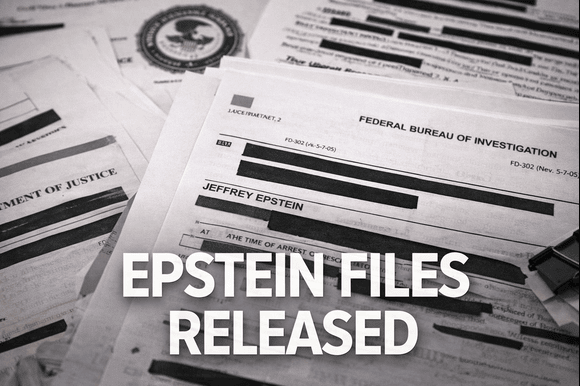
The United States Department of Justice has begun releasing portions of its extensive archive of records detailing the life, criminal conduct and investigation of the late convicted sex offender Jeffrey Epstein. However, the highly anticipated disclosure on Friday is expected to fall short of the full release mandated under recently enacted legislation.
Earlier in the day, Deputy Attorney General Todd Blanche cautioned that not all documents would be made public immediately, citing the need to protect the privacy and identities of victims of Epstein’s sex-trafficking crimes.
“I expect that we’re going to release more documents over the next couple of weeks,” Blanche told Fox News. “So today, several hundred thousand, and then, over the next couple of weeks, I expect several hundred thousand more.”
The announcement quickly sparked criticism from lawmakers and raised the prospect of a political backlash on Capitol Hill, where Congress had set a firm deadline for the release.
“It is disappointing that they haven’t been able to release these documents on time in compliance with the law,” Democratic Representative Ro Khanna said on Friday. “While it’s clear they’re trying, at the very least, to meet the deadline, they should have been able to do more.”
Congress established a 30-day deadline for the public release when it passed the Epstein Files Transparency Act on November 19. The law requires the Justice Department to “make publicly available in a searchable and downloadable format all unclassified records, documents, communications and investigative materials” related to Epstein that are in the government’s possession.
That mandate covers records held by the Federal Bureau of Investigation, as well as internal Justice Department communications concerning decisions to charge—or decline to charge—the disgraced financier. The law also extends to materials involving Epstein’s former girlfriend and associate, Ghislaine Maxwell, as well as documents concerning entities with “known or alleged ties” to Epstein.
While the legislation allows certain exemptions, including redactions to protect ongoing investigations, victim identities or explicit content, Khanna said the Justice Department still owed the public greater transparency.
“They owe Congress and the American public a clear timeline for when the remaining documents will be released and an explanation for why they were not all released today,” he said.
Khanna also criticised the initial batch of records for containing what he described as “very heavy redactions,” including material that he argued should already have been publicly accessible through previously released grand jury documents.
“They owe the Congress and the American public an explanation for every redaction that I didn’t see published on the DOJ page,” Khanna told reporters. “The law is very clear that any redaction has to be justified in writing.”
Frustration Grows Over Scope of File Release
The Justice Department’s website debuted a search function on Friday advertising what it called the “full Epstein library.” However, users quickly took to social media to complain about access issues, including long queues to enter the site and a search tool that failed to return results for basic terms associated with the case.
Viewers also noted that many of the newly posted documents were heavily censored, with pages largely blacked out.
“I was encouraged initially when Todd Blanche said that we were going to have hundreds of thousands of documents released,” Khanna said. “So far, I have not seen much new.”
Khanna and Republican Representative Thomas Massie of Kentucky were among the bipartisan sponsors of the Epstein Files Transparency Act. Khanna warned that the Trump administration could face consequences if it fails to comply fully with the law.
“Thomas Massie and I will continue to explore all options to ensure compliance, whether that means holding people in inherent contempt, recommending prosecution, recommending impeachment, or pursuing private lawsuits,” Khanna said.
The Democratic Party’s official account also seized on Blanche’s comments, underscoring that Friday’s disclosure was only partial.
“Trump’s DOJ will not comply with today’s release deadline for the Epstein files,” the party wrote. “All files were required by law to be released today.”
Some Republicans also voiced frustration. “Release all the files,” Republican Representative Marjorie Taylor Greene of Georgia wrote on social media. “It’s literally the law.”
In the days leading up to Friday’s release, Massie posted a 14-minute video explaining how the public should evaluate the scope of the disclosures.
“The victims’ lawyers have been in contact with me, and collectively they know there are at least 20 names of men accused of sex crimes in the possession of the FBI,” Massie said, referring to FD-302 forms used by the FBI to summarise witness interviews.
“If we get a large production and it doesn’t contain a single name of any male accused of sex crimes, sex trafficking or rape, then we know they haven’t produced all the documents,” he added.
Survivors Seek Accountability and Transparency
Survivors of Epstein’s abuse have long pressed the US government to release its complete investigative file. Epstein died in 2019 in a New York City jail while awaiting federal trial on sex-trafficking charges.
More than a decade earlier, in 2008, Epstein reached a controversial plea deal with federal prosecutors in Florida, pleading guilty to solicitation and child prostitution charges. The deal drew widespread condemnation for failing to reflect the scope of his alleged crimes.
Hundreds of women have since come forward, accusing Epstein of sexual abuse and exploitation, often saying they were minors at the time.
The case has continued to draw intense scrutiny due to Epstein’s wealth and his connections to powerful figures, including Microsoft co-founder Bill Gates, academic Noam Chomsky, former US President Bill Clinton and current President Donald Trump.
Earlier this year, Andrew Mountbatten-Windsor, formerly a British prince, was stripped of royal titles and privileges following his association with Epstein and allegations of sexual abuse.
In the United States, the Epstein case has become a lingering political liability for the Trump White House, which has frequently described itself as the “most transparent administration in history.” Members of Trump’s “Make America Great Again” base have long promoted conspiracy theories suggesting Epstein maintained a secret “client list” to blackmail elites.
Although Attorney General Pam Bondi publicly stated in February that such a list was on her desk, she later issued a joint memo in July with FBI Director Kash Patel stating that no such document existed. The reversal triggered renewed outrage and speculation, including scrutiny of Trump’s past relationship with Epstein.
Trump has repeatedly denied being friends with Epstein, despite photographs and records showing social interactions between the two. In July, Trump told reporters that their relationship ended after Epstein allegedly recruited employees from Trump’s Mar-a-Lago resort.
“I said, ‘Listen, we don’t want you taking our people,’” Trump said. “And then he did it again, and I said, ‘Outta here.’”
In a recent interview with Vanity Fair, Trump’s chief of staff, Susie Wiles, acknowledged that Trump’s name appears in the Epstein files but denied any wrongdoing.
“He’s not in the file doing anything awful,” Wiles said. “I know it’s a passé word, but they were sort of young, single playboys together.”
Trump has at times lashed out at critics linking him to Epstein, even calling some supporters “stupid” for focusing on the issue. However, in November, he reversed course and urged Republicans to support the Epstein Files Transparency Act.
The legislation passed with overwhelming bipartisan backing, clearing the House of Representatives by a vote of 427 to one and receiving unanimous approval in the Senate.