
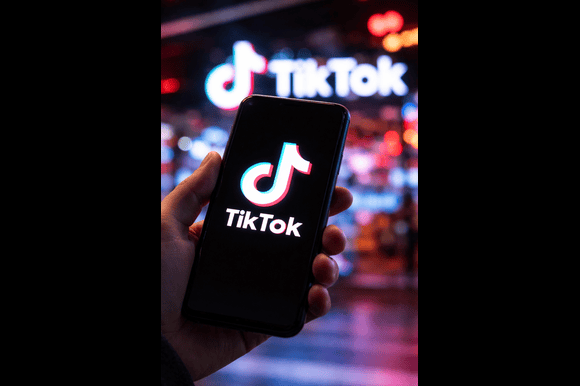
TikTok’s Chinese parent company ByteDance has entered into binding agreements with a group of American and international investors to operate the video-sharing platform’s US business, according to a memo sent to employees on Thursday by TikTok chief executive Shou Zi Chew.
Under the arrangement, roughly half of the new joint venture will be controlled by a consortium of investors that includes US software giant Oracle, private equity firm Silver Lake, and MGX, an investment company based in the United Arab Emirates, Chew said in the internal communication.
The deal, which is expected to close on January 22, would bring an end to years of political and regulatory pressure from Washington, where lawmakers and successive administrations have sought to force ByteDance to divest TikTok’s US operations due to national security concerns.
Ownership Structure and Key Terms
According to the memo, ByteDance will retain a 19.9 percent stake in the US business. Oracle, Silver Lake and Abu Dhabi-based MGX will each acquire 15 percent ownership, while the remaining 30.1 percent will be held by affiliates of ByteDance’s existing global investors.
TikTok said the agreement closely mirrors the framework announced in September, when US President Donald Trump delayed the enforcement of legislation that would have banned the app unless it was sold to non-Chinese owners.
In the memo to staff, TikTok said the deal would allow “more than 170 million Americans to continue discovering a world of endless possibilities as part of a vital global community.”
Algorithm Oversight and Security Measures
The White House has previously said that Oracle — co-founded by Trump ally Larry Ellison — will play a critical role in the new structure by licensing TikTok’s recommendation algorithm as part of the agreement.
Under the terms, TikTok’s algorithm will be retrained using US user data, a step intended to ensure that content recommendations are free from external influence or manipulation.
However, critics have questioned whether the measures go far enough to safeguard user privacy and national security.
Long Road to a Deal
The agreement follows a series of delays and intense negotiations stretching back several years. In April 2024, during President Joe Biden’s administration, the US Congress passed legislation requiring TikTok to be banned on national security grounds unless ByteDance divested its US operations.
The law was originally scheduled to take effect on January 20, 2025, but enforcement was postponed multiple times by President Trump while his administration worked to finalise an ownership structure acceptable to both Washington and Beijing.
In September, Trump said he had spoken directly with Chinese President Xi Jinping, claiming that Xi had approved the deal. However, uncertainty persisted after the two leaders met in person in October, amid broader tensions between the US and China over issues such as trade and technology.
Geopolitical Implications
Analysts say TikTok has become a key bargaining chip in the wider US-China relationship.
“TikTok has become a bargaining chip in the broader US-China relationship,” said Alvin Graylin, a lecturer at the Massachusetts Institute of Technology. “With recent softening tensions, Beijing’s approval of the ownership structure and algorithm licensing appears less like capitulation and more like a carefully calibrated de-escalation, allowing both sides to claim a domestic political win.”
Political Pushback and Lawmaker Concerns
Despite the deal, scepticism remains among some US lawmakers. Senator Ron Wyden, a Democrat from Oregon, criticised the agreement, saying it would not “do a thing to protect the privacy of American users.”
Wyden questioned whether the algorithm safeguards would truly place TikTok’s technology in safer hands. “It’s unclear that it will even put TikTok’s algorithm in safer hands,” he said.
Wyden opposed the 2024 ban legislation and was among lawmakers who pushed to extend the deadline in January, arguing that Congress needed more time to address perceived risks posed by China.
Reactions From Companies and Users
The White House declined to comment directly on the agreement, referring inquiries to TikTok. Oracle and Silver Lake also declined to comment, while the BBC said it had contacted MGX for a response.
Among TikTok users, reactions have been mixed. Tiffany Cianci, a small business owner with more than 300,000 followers and nearly four million likes on the platform, said she remains cautiously optimistic about the involvement of new investors.
“I hope small business owners are protected,” Cianci said, adding that she wants the platform’s user experience to remain unchanged for entrepreneurs who rely on TikTok for marketing.
TikTok has said that more than seven million small businesses in the United States use the platform to promote their products and services.
“I reserve judgment on whether or not we have saved the app for those small businesses,” Cianci said.
She noted that TikTok’s profit-sharing arrangements have been more favourable than those offered by competitors such as Meta, which influenced her decision to focus on TikTok as a marketing platform.
Over the past year, Cianci has played an active role in organising protests in Washington and on TikTok aimed at preventing the app from being banned.
As the deal moves toward completion, TikTok’s future in the United States appears more secure than at any point in recent years, though debates over data security, user privacy and geopolitical influence are likely to continue well beyond January.