


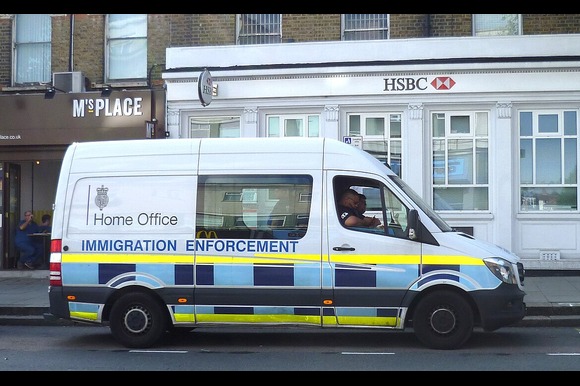
London — The United Kingdom’s latest migration data reveal a complex and evolving picture, showing declining overall net migration, continued high asylum demand, and persistent small boat crossings across the English Channel. While political attention remains sharply focused on irregular migration, official figures underline that legal visas continue to account for the vast majority of people entering the UK.
The data, drawn from recent Home Office releases, Office for National Statistics (ONS) estimates and government briefings, highlight the competing pressures facing policymakers as they attempt to balance border control, labour shortages, humanitarian obligations and public concern.
Overall Movement and Legal Entry Routes
The UK continues to experience extremely high volumes of cross-border movement, much of it unrelated to long-term migration. In the year ending September 2025, the country recorded more than 135 million arrivals, most of them British citizens returning home or short-term visitors.
Among non-British nationals, legal entry routes dominate:
- Around 2.2 million visitor visas were issued, largely for tourism, family visits and short business travel.
- Approximately 839,000 visas were granted for work, study, family reunion and humanitarian purposes.
- The rollout of the Electronic Travel Authorisation (ETA) scheme further expanded regulated travel, with nearly 20 million ETAs issued, enabling short stays for travellers from previously visa-free countries.
These figures underscore a central point often lost in political debate: the UK’s migration system remains overwhelmingly legal, regulated and structured.
Asylum Applications at Record Levels
Asylum remains one of the most challenging and politically sensitive aspects of UK migration. In the year to September 2025, the UK received more than 110,000 asylum applications, the highest number on record.
Several factors are driving the rise:
- Ongoing conflicts and instability in regions including the Middle East, Afghanistan, parts of Africa and South Asia
- Increased use of irregular routes, particularly small boat crossings
- Slow asylum processing, which encourages backlogs to grow
A major consequence has been the government’s continued reliance on temporary hotel accommodation. More than 36,000 asylum seekers are currently housed in hotels, despite repeated pledges to phase out the practice due to its high cost and impact on local communities.
The presence of asylum hotels has also triggered local protests in parts of England, reflecting broader tensions over housing shortages, public services and misinformation circulating online.
Small Boat Crossings: A Persistent Flashpoint
Irregular migration across the English Channel remains a central focus of public and political attention.
For the year ending March 2025:
- Around 44,000 people were detected entering the UK irregularly
- Roughly 38,000 of them arrived by small boats, accounting for more than 85% of all irregular arrivals
- Small boat arrivals rose by around 22% compared with the previous year, though they remained below the record peak of 2022
Although the overall number fluctuates with weather and enforcement activity, small boats continue to be a reliable route used by smuggling networks, with vessels often carrying more passengers than in earlier years.
Crucially, small boat arrivals now account for around one-third of all asylum claims, placing significant strain on border processing, accommodation systems and asylum decision-making.
Despite agreements with France and increased patrols, crossings have continued throughout 2025, with large numbers arriving on single days during favourable conditions, reinforcing the difficulty of stopping the route entirely.
Net Migration Falls Sharply
While asylum and small boats dominate headlines, the biggest shift in the UK’s migration picture is the sharp fall in net migration — the difference between people arriving and those leaving.
For the year to June 2025:
- Net migration fell to around 204,000, down dramatically from 649,000 the previous year
- This marks the lowest level in roughly four years
The decline reflects several factors:
- Fewer work and student visas, following tighter eligibility rules
- Reduced post-pandemic inflows
- Higher numbers of people leaving the UK after short stays
Despite the drop, asylum seekers now make up a much larger share of net migration, accounting for around 44% of the total — a major shift from previous years when work and study dominated.
Politics, Policy and Public Pressure
Migration has become one of the most contentious political issues in the UK. The Labour government under Prime Minister Keir Starmer faces sustained pressure to demonstrate control over borders, particularly on small boats and asylum accommodation.
The Home Office argues that progress is being made through:
- Faster asylum decision-making
- International cooperation to disrupt smuggling gangs
- New returns agreements
Critics, however, say results remain limited, pointing to continued crossings, high hotel costs and unresolved backlogs.
Opposition parties and anti-immigration groups argue for tougher enforcement, while humanitarian organisations warn that policies must comply with international law and protect vulnerable people fleeing conflict and persecution.
What the Data Ultimately Shows
Taken together, the latest figures reveal several key realities:
- Legal migration remains the dominant form of entry into the UK
- Asylum applications are at historic highs, placing sustained pressure on systems
- Small boat crossings persist despite enforcement efforts
- Overall net migration has fallen sharply, contradicting claims of unchecked growth
Experts caution that migration trends are highly sensitive to global events, policy changes and economic conditions — meaning future numbers could rise or fall again.
Looking Ahead
Government advisers suggest that while net migration has eased, long-term pressures remain, particularly in sectors reliant on overseas labour and higher education. Projections indicate that net migration could rise again later in the decade, even as efforts to reduce irregular arrivals continue.
For now, the UK faces the challenge of managing migration in a way that is effective, lawful and publicly credible, while maintaining its humanitarian commitments in a volatile global landscape.