

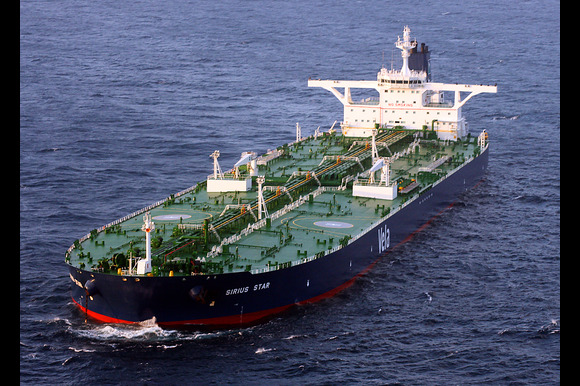
The United States has seized an oil tanker that recently departed from Venezuela, the US Department of Homeland Security (DHS) has confirmed, marking the second such operation this month involving an oil-carrying vessel off Venezuela’s coast.
The latest seizure follows an announcement earlier this week by US President Donald Trump, who said he had ordered a “blockade” of sanctioned oil tankers entering and leaving Venezuela as part of Washington’s intensified pressure campaign against the government of President Nicolás Maduro.
US Coast Guard Leads Operation
The operation was carried out by the US Coast Guard, mirroring a similar interdiction conducted earlier this month. According to US officials, the vessel was boarded by a specialised tactical team while sailing in international waters, rather than within Venezuelan territorial seas.
US Department of Homeland Security Secretary Kristi Noem, whose department oversees the Coast Guard, confirmed the seizure and shared footage of the operation on social media platform X.
“In a pre-dawn action early this morning on December 20, the US Coast Guard, with the support of the Department of War, apprehended an oil tanker that was last docked in Venezuela,” Noem wrote.
She also posted a seven-minute video showing US helicopters landing on the deck of the ship, which had the name Centuries clearly visible along its side.
“The United States will continue to pursue the illicit movement of sanctioned oil that is used to fund narco-terrorism in the region,” Noem said, adding: “We will find you, and we will stop you.”
Ship’s Background and Legal Status
The Centuries is registered under the Panamanian flag, though maritime records reviewed by BBC Verify show that over the past five years the vessel has also sailed under the flags of Greece and Liberia.
Despite the US action, the ship does not appear on the US Treasury Department’s list of sanctioned vessels, raising questions about the legal basis for its seizure and the broader scope of Washington’s maritime enforcement operations.
Venezuela Condemns Seizure
Venezuela reacted sharply to the latest US move, condemning the seizure as an act of “theft and kidnapping.” In an official statement, the Venezuelan government accused Washington of attempting to seize the country’s natural resources.
“These acts will not go unpunished,” the statement said, adding that Caracas intends to file a formal complaint with the United Nations Security Council, as well as with other multilateral organisations and governments worldwide.
Venezuelan officials have repeatedly accused the United States of conducting economic warfare against the country, particularly targeting its oil industry, which remains the backbone of government revenue.
Escalating US Military Presence
The seizure comes amid a significant expansion of US military activity in the Caribbean Sea in recent weeks. US forces have carried out deadly strikes on boats alleged to be involved in Venezuelan drug smuggling, operations that have reportedly resulted in the deaths of around 100 people.
The US military has not publicly released evidence confirming that the targeted vessels were carrying drugs. As a result, these strikes have drawn growing scrutiny from members of the US Congress, who are questioning both the intelligence behind the operations and the rules of engagement being used.
Accusations Against Maduro
Washington has accused President Nicolás Maduro of leading what it describes as a designated terrorist organisation, known as the Cartel de los Soles—an allegation that Maduro and his government strongly deny.
The Trump administration claims that Maduro and associated networks use “stolen” Venezuelan oil to finance a range of criminal activities, including drug trafficking, human trafficking, murder and kidnapping.
Following the latest tanker seizure, US Defence Secretary Pete Hegseth said on X that the United States would continue to conduct “unflinching maritime interdiction operations” aimed at dismantling illicit criminal networks.
“Violence, drugs, and chaos will not control the Western Hemisphere,” Hegseth wrote.
Oil at the Centre of the Dispute
Venezuela holds the world’s largest proven oil reserves and remains heavily dependent on oil exports to fund state operations, social programmes and public-sector wages. US sanctions have severely constrained the country’s ability to sell crude on international markets, forcing it to rely on complex shipping arrangements and intermediaries.
President Trump’s declaration of a “blockade” came less than a week after another tanker seizure, when US authorities intercepted a vessel believed to be part of a so-called “ghost fleet” operating off Venezuela’s coast.
That ship, identified as the Skipper, was accused by the White House of engaging in illicit oil shipping using deceptive practices to conceal its activities. US officials said the tanker would be transported to a US port.
At the time, Venezuela’s government denounced the action, with President Maduro accusing the United States of “kidnapping the crew” and stealing the vessel.