


Washington, D.C., June 25, 2026 — The White House has formally requested Congress approve an additional $87.6 billion (£66.5 billion) in emergency spending, with the majority of the funds earmarked for military operations and related expenses stemming from the United States’ conflict with Iran. The funding request comes amid growing political divisions in Washington and just one day after Congress passed a resolution criticizing the administration’s handling of the war.
According to documents submitted to lawmakers on Wednesday, approximately $67 billion of the proposed package would be allocated to the Department of Defense. Administration officials describe the request as necessary to address what they call urgent operational requirements arising from the conflict, known by the Pentagon as Operation Epic Fury (OEF).
The proposal includes $21 billion designated for replenishing munitions and weapons stockpiles depleted during months of military operations. Another $17.3 billion would cover ongoing operational and deployment costs, while $12.1 billion has been requested for classified defence programmes whose details remain undisclosed for national security reasons.
In addition to military expenditures, the package contains funding for several domestic and international initiatives not directly linked to the conflict. The White House is seeking $11 billion in assistance for American farmers facing economic challenges and approximately $1.4 billion to support efforts aimed at containing and responding to an Ebola outbreak affecting parts of Central Africa.
The formal funding request was delivered by the White House Office of Management and Budget in a letter addressed to House Speaker Mike Johnson. In the document, administration officials emphasized that most of the proposed spending is intended to meet immediate requirements associated with Operation Epic Fury and to ensure the military remains prepared for future contingencies.
A portion of the funding package, roughly $300 million, would be directed toward strengthening security at US embassies and diplomatic facilities throughout the Middle East and South Asia. Several American diplomatic sites in the region came under attack or faced heightened security threats during the conflict, prompting calls for additional protective measures.
Although the United States and Iran are currently observing a ceasefire following recent diplomatic negotiations, administration officials argue that military readiness remains a priority. The budget request notes that significant resources are required to rebuild weapons inventories and restore capabilities following months of combat operations and strategic strikes.
Despite the White House’s insistence that the funding is essential, the proposal faces a difficult path through Congress. Public support for the Iran conflict has weakened in recent months, and many lawmakers are increasingly wary of approving additional spending as the country approaches the November midterm elections.
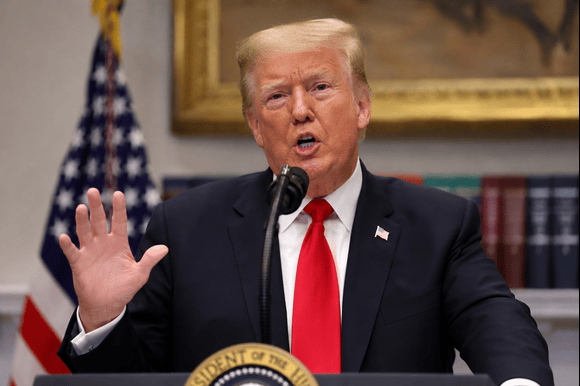
The funding debate comes at a politically sensitive moment for President Donald Trump, who has encountered growing resistance not only from Democrats but also from members of his own Republican Party. Concerns over the duration, cost, and objectives of the conflict have fueled criticism from lawmakers across the political spectrum.
Earlier this week, Congress approved a resolution aimed at limiting the president’s authority to continue military operations without further legislative approval. Although the measure is largely symbolic and unlikely to force immediate policy changes, it represents a significant rebuke of the administration’s war strategy.
The vote marked the first time Congress successfully passed a resolution directing a sitting president to end an ongoing military operation. While the measure is not expected to alter military deployments in the short term, supporters argue it sends a strong message about congressional concerns regarding executive war powers.
President Trump reacted angrily to the vote, dismissing the resolution as ineffective and poorly timed. Before meeting Republican senators on Capitol Hill, he publicly criticized lawmakers who supported the measure and questioned their commitment to national security objectives.
ensions were evident during a closed-door luncheon with Senate Republicans on Wednesday. According to several attendees, the president expressed frustration over the vote and challenged lawmakers who had broken ranks with the administration.
Among those present was Republican Senator Bill Cassidy of Louisiana, who later described a heated exchange with the president. Cassidy told reporters that he confronted Trump over what he viewed as a lack of transparency regarding the conflict’s progress and objectives.
According to Cassidy, he argued that the administration had failed to provide the American public with a clear explanation of the war’s status. He also questioned why the conflict had continued far longer than initially anticipated and suggested that key strategic goals remained unmet despite months of military action.
The disagreement highlighted broader concerns within the Republican Party, where some lawmakers have become increasingly sceptical of the administration’s approach to both the conflict and the recently announced peace framework with Iran.
During a separate meeting earlier in the day with NATO Secretary General Mark Rutte, President Trump again criticized lawmakers who supported the war powers resolution. The president accused opponents of undermining the country’s military efforts and argued that continued political divisions could weaken America’s position in ongoing negotiations.
The administration has repeatedly defended its handling of the conflict, maintaining that military pressure played a crucial role in bringing Iran to the negotiating table. White House officials argue that the ceasefire and ongoing diplomatic contacts demonstrate that the strategy has produced tangible results.
Questions about the financial burden of the war, however, continue to dominate discussions on Capitol Hill. Last month, Pentagon Chief Financial Officer Jules Hurst informed a congressional committee that direct military operations had cost approximately $29 billion since the conflict began.
Many defence experts and lawmakers contend that the actual cost is considerably higher. Analysts note that official figures often exclude long-term expenses such as equipment replacement, veteran care, intelligence operations, economic disruptions, and broader regional security commitments.
With Congress now preparing to debate the White House’s $87.6 billion funding request, lawmakers face difficult decisions over military spending, national security priorities, and the future direction of US policy toward Iran. The outcome of the debate is expected to shape both the administration’s foreign policy agenda and the political landscape ahead of this year’s crucial midterm elections.