

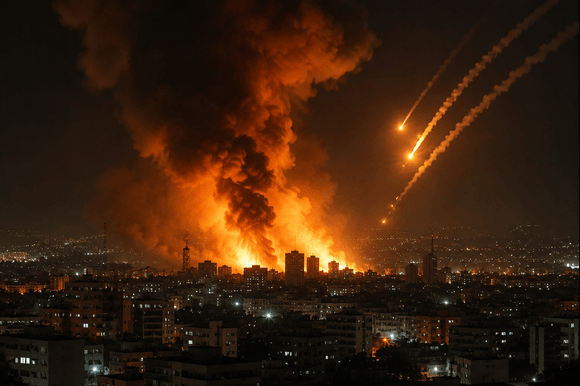
Washington/Tehran, June 26: The United States has carried out military strikes against targets in Iran after President Donald Trump warned that Washington would respond forcefully to an attack involving a fire in the Gulf region, marking a dramatic escalation in tensions between the two countries and raising fresh fears of a wider regional conflict.
The latest military action comes amid an already volatile security environment in the Middle East, where weeks of rising hostilities, missile exchanges and diplomatic deadlock have heightened concerns that the confrontation between Washington and Tehran could spiral into a prolonged war.
According to US officials, the strikes were launched after intelligence assessments linked Iran or Iran-backed groups to an incident involving a major fire in the Gulf. While American authorities described the operation as a defensive response intended to deter further attacks, Iranian officials strongly denied responsibility and condemned the strikes as an act of aggression that violates international law.
President Trump had earlier warned that the United States would respond “swiftly and decisively” to any attack threatening American interests or regional stability. Following the Gulf incident, he accused Iran of continuing to destabilize the region through direct and indirect military actions and said Washington would not tolerate further provocations.
“The United States will protect its people, its partners and freedom of navigation in the Gulf,” Trump said, adding that any attempt to target American personnel or strategic infrastructure would be met with overwhelming force.
US defence officials said the operation targeted military-related facilities believed to be connected to Iran’s operational capabilities. They maintained that the strikes were carefully planned to minimize civilian casualties while degrading infrastructure considered a threat to regional security.
The Pentagon stated that the attacks were limited in scope and were not intended to trigger a broader military conflict. Nevertheless, officials stressed that the United States remains prepared to undertake additional operations if American forces or allies come under further attack.
Iranian authorities rejected the US allegations, insisting that Tehran had no involvement in the Gulf fire and accusing Washington of using unsubstantiated claims as justification for military action.
Iran’s Foreign Ministry described the strikes as an unlawful violation of its sovereignty and warned that the Islamic Republic reserves the right to respond under international law.
Senior Iranian officials said the attacks demonstrate what they called America’s continued policy of military pressure rather than diplomacy. They urged the international community to condemn the strikes and accused Washington of undermining regional peace efforts.
State media in Iran reported that emergency services and military personnel were assessing the damage at the targeted locations, although officials did not immediately provide details regarding casualties or the extent of destruction.
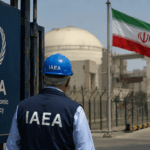
The latest exchange follows months of strained relations despite ongoing diplomatic contacts aimed at preventing further escalation. Negotiations over Iran’s nuclear programme, sanctions relief and broader regional security issues have repeatedly stalled amid mutual accusations of bad faith.
Military analysts warned that the latest strikes significantly increase the risk of retaliatory attacks by Iran or allied armed groups operating across the Middle East. US military installations and commercial shipping routes throughout the Gulf remain on heightened alert amid concerns over possible reprisals.
Regional governments have also intensified security measures as fears grow that the confrontation could spread beyond Iran and the United States, affecting neighbouring countries and international energy supplies.
Several Gulf nations have called for restraint, urging both Washington and Tehran to avoid actions that could further destabilize one of the world’s most strategically important regions.
International leaders expressed growing concern over the renewed violence and appealed for immediate diplomatic engagement to prevent a broader conflict. The United Nations renewed its call for all parties to exercise maximum restraint and resolve disputes through dialogue rather than military confrontation.
The Gulf region remains a critical corridor for global energy exports, and renewed hostilities have already raised concerns among international markets over the potential impact on oil production and maritime trade.
Security experts noted that any sustained conflict involving Iran could disrupt shipping through the Strait of Hormuz, one of the world’s busiest energy transit routes, potentially affecting global fuel prices and international commerce.
Despite the latest military action, US officials said diplomatic channels remain open and reiterated that Washington prefers a negotiated resolution if Iran refrains from further hostile actions.
Iran, however, maintains that meaningful negotiations cannot proceed while it remains under military pressure and economic sanctions, arguing that Washington must demonstrate a genuine commitment to diplomacy before any comprehensive agreement can be achieved.
As both countries continue exchanging warnings, the latest US strikes underscore the fragile state of regional security and the growing possibility that isolated incidents could trigger a much wider confrontation with far-reaching geopolitical and economic consequences.