

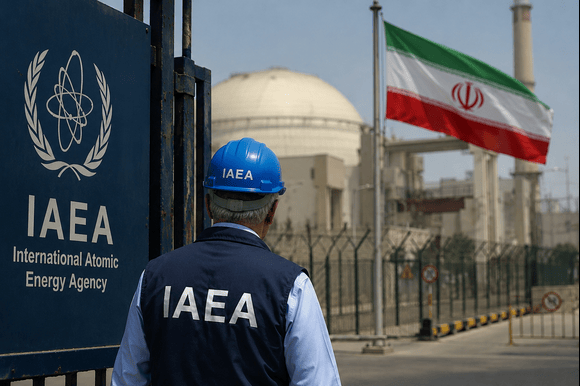
Vienna, June 26: The head of the International Atomic Energy Agency (IAEA) has renewed calls for a comprehensive international verification mechanism to monitor Iran’s nuclear programme, stressing that only thorough inspections can provide assurance that Tehran is not pursuing nuclear weapons.
Speaking to reporters on Friday, IAEA Director General Rafael Grossi said establishing a “very strong system of verification” should be an immediate priority as negotiations between Iran and the United States continue following their preliminary ceasefire agreement. He emphasized that international oversight, rather than political assurances alone, remains essential to verifying the peaceful nature of Iran’s nuclear activities.
For years, the United States and several Western governments have argued that Iran’s nuclear programme could provide the capability to develop nuclear weapons. Tehran has consistently rejected those allegations, maintaining that its nuclear activities are exclusively intended for civilian purposes, including electricity generation and scientific research.
Grossi acknowledged Iran’s repeated declarations that it has no intention of producing nuclear weapons but stressed that the IAEA’s responsibility extends beyond accepting official statements.
“The government of Iran has affirmed quite clearly that developing nuclear weapons is not their intention, but intentions alone are insufficient,” Grossi said. “To establish confidence, we require a very strong system of verification as soon as practicable.”
He explained that the UN nuclear watchdog does not assess political intentions but instead bases its conclusions on inspections and technical verification.
“Our responsibility is not to judge what countries intend to do,” Grossi noted. “Our mandate is to verify. That means we must be able to inspect wherever necessary.”
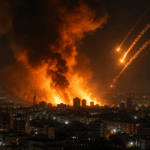
The question of inspections has emerged as one of the most contentious issues in negotiations aimed at securing a permanent peace agreement between Washington and Tehran following last year’s 12-day conflict involving the United States, Israel and Iran. During the fighting, multiple Iranian nuclear facilities were targeted in coordinated US and Israeli strikes, further complicating efforts to rebuild confidence between all parties.
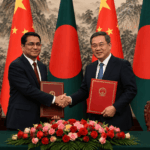
The current negotiations are based on a 14-point memorandum of understanding signed earlier this month, which laid the groundwork for a preliminary ceasefire and established a framework for broader discussions on security, sanctions and nuclear oversight.
Iran suspended cooperation with the IAEA in the aftermath of the military strikes carried out by the United States and Israel last year. However, in September Tehran agreed to allow agency inspectors to resume visits to several nuclear facilities across the country.
Although IAEA teams have since returned to a number of locations, access remains incomplete. Iran has yet to authorize inspections at the nuclear sites directly affected by the airstrikes, while questions also remain regarding the whereabouts and condition of portions of its stockpile of enriched uranium.
The unresolved status of those materials has heightened international concern and made independent verification one of the central issues in ongoing diplomatic negotiations.
At the same time, both Washington and Tehran have issued conflicting accounts regarding the status of inspection arrangements, creating what Grossi described as a “war of statements.”
US officials insist that Iran accepted extensive inspection provisions as part of the memorandum of understanding and during subsequent discussions. Iranian officials, however, maintain that negotiations over inspection access remain limited and will only be finalized as part of a broader comprehensive agreement.
Iranian Deputy Foreign Minister Kazem Gharibabadi stated on Wednesday that questions concerning access to the bombed nuclear facilities, as well as inspection of nuclear materials, would be addressed “within the framework of a final agreement” currently under negotiation with the United States.
He also argued that expanded cooperation with United Nations inspectors would depend on Washington taking concrete measures to remove all economic sanctions imposed on Iran.
According to Gharibabadi, practical action by the United States to lift sanctions remains a prerequisite for resolving outstanding nuclear monitoring issues.
The United States has rejected that interpretation. President Donald Trump has accused Tehran of issuing misleading public statements regarding the negotiations and insisted that Iran has already accepted what he described as the “highest level nuclear inspections.”
Despite the contradictory public positions adopted by both sides, Grossi expressed confidence that the memorandum of understanding clearly establishes an oversight role for the IAEA.
“There is certainly a war of statements taking place,” Grossi observed. “But the memorandum explicitly provides that the nuclear component of the agreement will be supervised by the IAEA.”
He added that technical preparations for renewed inspections are already underway and expressed hope that agency experts would soon gain access to the necessary facilities.
Grossi also indicated that the exact timetable for resuming inspections is less important than ensuring the process is conducted thoroughly and in accordance with the agreement.
“It is not essential whether we enter in one week or two weeks,” he said, noting that the memorandum contains several broader political and security provisions beyond its nuclear commitments.
Meanwhile, Iran’s Ministry of Foreign Affairs again rejected allegations surrounding its nuclear programme on Friday while responding to a joint statement released by the US Secretary of State and the foreign ministers of the Gulf Cooperation Council (GCC).
The joint declaration reaffirmed the shared objective of preventing Iran from acquiring nuclear weapons and called for continued international efforts to ensure Tehran’s compliance with nuclear commitments.
Responding to the statement, Iran reiterated that its nuclear programme remains entirely peaceful and accused the United States and Israel of promoting what it described as fabricated accusations aimed at undermining the country’s legitimate nuclear activities.
The ministry also called on Gulf Cooperation Council member states to work with Iran in establishing a nuclear-weapons-free zone across West Asia, arguing that regional cooperation, rather than confrontation, offers the best path toward long-term stability and security.
As diplomatic negotiations continue, international attention remains focused on whether the United States and Iran can bridge their differences over inspections, sanctions and verification measures. For the IAEA, restoring unrestricted access to Iranian nuclear facilities remains a critical step toward ensuring transparency and rebuilding international confidence in the country’s nuclear programme.