

Spanish Prime Minister Pedro Sánchez has warned that the country faces “complex hours” as devastating wildfires continue to spread across large parts of Spain and neighbouring France, forcing the evacuation of more than 270,000 people and placing emergency services under immense pressure.
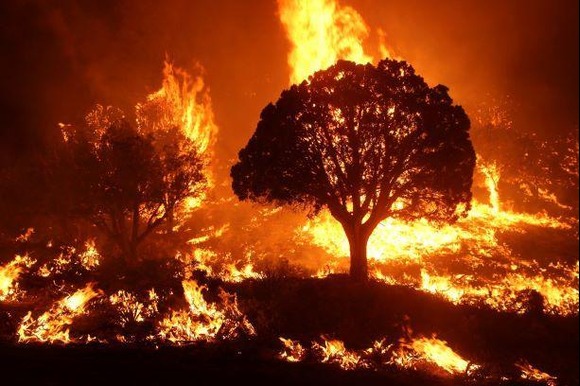
The fast-moving blazes, fuelled by scorching temperatures, prolonged drought and powerful winds, have swept through forests, farmland and residential communities, destroying thousands of hectares of land and threatening homes, businesses and critical infrastructure. Authorities have described the fires as among the most severe to hit the region in recent years.
Speaking during a visit to emergency coordination centres, Sánchez praised firefighters, military personnel and civil protection teams battling the flames around the clock but cautioned that worsening weather conditions could further complicate firefighting efforts.
“We are facing complex hours,” the Spanish leader said, urging residents to follow evacuation orders and avoid entering high-risk areas as authorities work to contain multiple active fire fronts.
Across Spain, thousands of firefighters supported by military emergency units, helicopters and water-bombing aircraft have been deployed to tackle the rapidly advancing fires. However, strong winds and extremely dry vegetation have repeatedly reignited contained areas, making it difficult for emergency crews to bring the situation under control.
Officials said tens of thousands of residents were evacuated from towns and villages in several Spanish regions as flames approached populated areas. Emergency shelters have been established to accommodate displaced families, while authorities continue to monitor communities at greatest risk.
Neighbouring France is also battling major wildfires, with emergency services ordering widespread evacuations in southern regions where extreme heat and dry conditions have accelerated the spread of flames. French firefighters have been working alongside aerial firefighting aircraft to protect residential areas and prevent the fires from reaching key transport routes and tourist destinations.
Combined, authorities in Spain and France estimate that approximately 270,000 people have been forced to leave their homes as a precaution, making it one of the largest wildfire evacuation operations in Europe in recent years.
The fires have disrupted road and rail transport, while smoke has significantly reduced air quality across affected regions. Several highways have been closed, train services suspended and local airports placed on alert due to poor visibility caused by thick smoke drifting across large areas.
Emergency responders continue to focus on protecting lives and critical infrastructure while attempting to establish containment lines around the largest fire zones. Authorities have warned that shifting winds remain unpredictable, increasing the risk of sudden changes in the direction and intensity of the fires.
Meteorologists attribute the extreme wildfire conditions to an intense heatwave affecting southern Europe, where temperatures have remained well above seasonal averages. The prolonged period of hot, dry weather has left forests and vegetation exceptionally vulnerable to ignition, allowing fires to spread at unprecedented speed.
Climate experts have repeatedly warned that rising global temperatures are contributing to more frequent and intense wildfire seasons across southern Europe, with longer periods of drought and increasingly severe heatwaves creating ideal conditions for large-scale fires.
European Union authorities have mobilised additional firefighting resources through the bloc’s civil protection mechanism, enabling aircraft and specialist firefighting teams from several member states to assist national emergency services. Cross-border cooperation has become increasingly important as multiple countries face simultaneous wildfire emergencies.
Officials in both Spain and France have urged residents to remain vigilant, avoid unnecessary travel in affected areas and strictly follow instructions issued by emergency authorities. They also warned that new fires could ignite as long as extreme weather conditions persist.
With weather forecasts predicting continued high temperatures and strong winds over the coming days, emergency officials fear the wildfire crisis may intensify before conditions improve. Firefighters remain on high alert as they work tirelessly to contain the blazes, protect communities and prevent further loss of life and property across the Iberian Peninsula.