

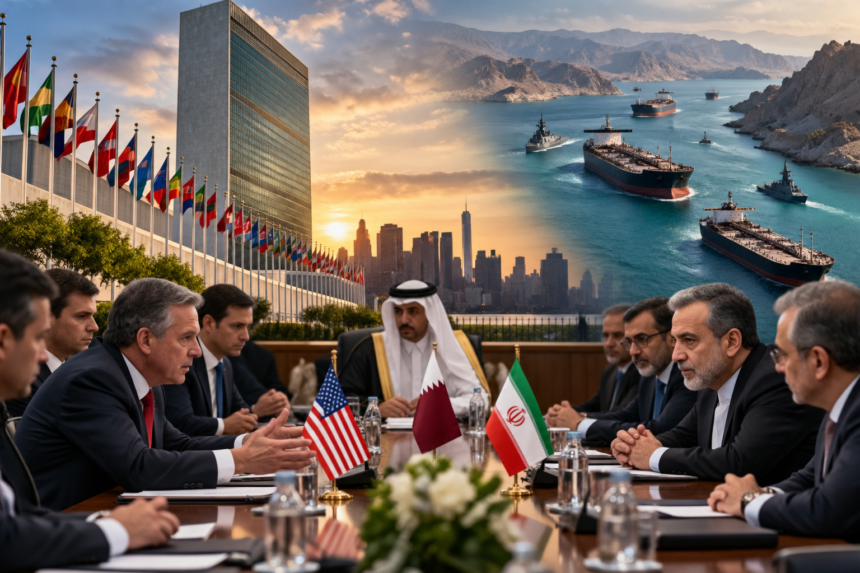
The United States and Iran have resumed high-level diplomatic contacts in New York, opening a new channel for negotiations as the conflict between the two countries continues to put pressure on the wider Middle East.
Iranian Foreign Minister Abbas Araghchi and US special envoy Steve Witkoff were involved in discussions on the sidelines of the United Nations General Assembly. Qatar helped facilitate communication between the two sides, with mediators moving between the delegations during the talks.
The discussions represent the first significant US-Iran contact since the earlier ceasefire process broke down in June. However, there was no immediate announcement of an agreement or breakthrough.
Witkoff described the latest round as constructive and said mediators would continue their efforts. US President Donald Trump also characterized the discussions as productive and said he believed there was momentum toward a possible agreement.
Trump issues warning during UN address
The talks came shortly after Trump used his address to the UN General Assembly to deliver a strong warning to Tehran.
Trump said the United States faced a choice between reaching an agreement with Iran and taking further military action. He used the word “annihilate” when describing what could happen if no peace deal were reached. Reuters reported that Trump also suggested an agreement could come after the US midterm elections in November.
The remarks added to uncertainty surrounding the negotiations, as Washington continues to demand guarantees concerning Iran’s nuclear capabilities while Tehran has called for an end to military and economic pressure.
Iran outlines conditions for ending the conflict
Iranian officials have publicly described several conditions they say are necessary for further progress.
According to Iranian Foreign Ministry spokesman Esmail Baghaei, Tehran communicated demands through Qatar that include an end to the war, a halt to what Iran calls US aggression, an end to the naval blockade and economic pressure, and the release of Iranian assets.
The Strait of Hormuz has become one of the most important issues in the negotiations. The waterway is a major route for international energy shipments, meaning prolonged disruption could affect oil markets and economies far beyond the Middle East.
A senior Iranian official also indicated that Tehran could consider reopening the strait if Washington takes steps to reduce military and economic pressure.
Regional pressure grows
The diplomatic effort comes as tensions continue across the region. Fighting involving Iran, Israel, the United States and Iran-aligned groups has created concerns about further escalation and disruption to energy supplies.
European officials have also been pressing for the Strait of Hormuz to be reopened. EU foreign policy chief Kaja Kallas discussed the issue with Araghchi, while French President Emmanuel Macron has described reopening the waterway as a major objective of diplomatic efforts.
Qatar has continued working as a mediator, while regional governments have sought ways to reduce the risk of the conflict spreading further.
No agreement yet
Despite the renewed diplomatic contact, the two sides remain divided over major issues, including military activity, sanctions, Iran’s nuclear programme and access through the Strait of Hormuz.
For now, the New York discussions have reopened a diplomatic channel without producing a publicly announced settlement. Both Washington and Tehran face pressure to find a way forward while avoiding another escalation in the conflict.
Further meetings and mediation efforts are expected as diplomats continue working around the UN General Assembly.