

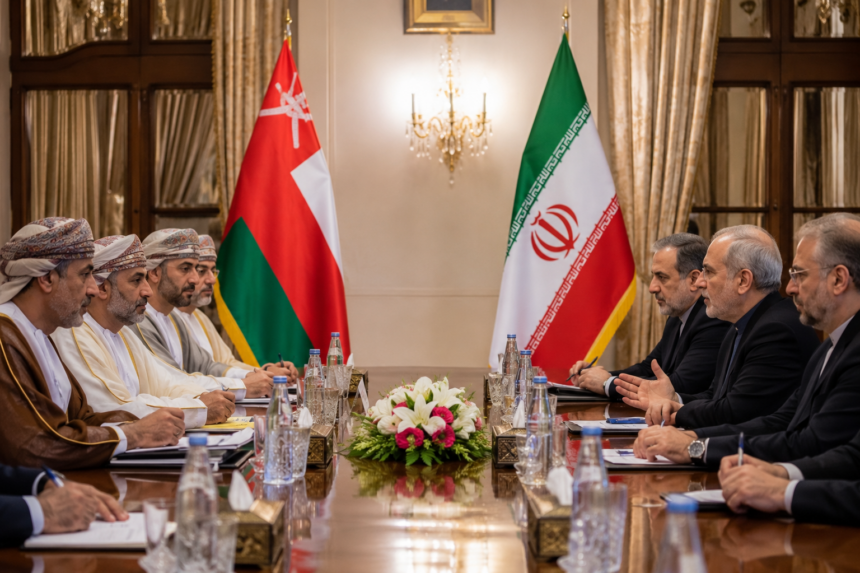
An Omani delegation has arrived in Iran to explore possible arrangements for managing maritime traffic through the Strait of Hormuz as military hostilities between the United States and Iran continue to escalate.
According to Iran’s state-run IRNA news agency, the Omani officials reached Tehran late on Friday and are scheduled to hold discussions with Iranian authorities on potential mechanisms for overseeing navigation through the strategically vital waterway. The Strait of Hormuz has emerged as one of the central flashpoints in the ongoing conflict, with global markets increasingly concerned over disruptions to energy supplies.
Before the conflict erupted, nearly 20 percent of the world’s oil and natural gas exports passed through the narrow shipping corridor. Continued instability and the effective closure of the strait have fuelled fears of prolonged supply disruptions, contributing to rising global energy prices and increasing pressure on international trade.
IRNA described the visit as part of continuing diplomatic consultations between Iran and Oman. Iran’s Foreign Ministry also confirmed that Foreign Minister Abbas Araghchi held a telephone conversation with his Omani counterpart, Badr Albusaidi, ahead of the delegation’s arrival.
Neither side disclosed the specific proposals under discussion. However, Iranian officials have consistently stated throughout the conflict that Tehran remains willing to cooperate with Oman in overseeing maritime operations in the Strait of Hormuz and ensuring navigation under a jointly managed framework.
The proposal has so far been rejected by both the United States and several Gulf Arab states. Despite those objections, Oman occupies a strategically important position at both the entrance and exit of the Strait of Hormuz and has long served as a trusted mediator in regional disputes. The Gulf nation maintains diplomatic relations with Iran while also preserving close ties with neighbouring Gulf countries, allowing it to play a unique diplomatic role during periods of heightened regional tension.
In a statement posted on the social media platform X, Omani Foreign Minister Badr Albusaidi stressed the importance of keeping international shipping lanes open.
“Vital waterways, including the Strait of Hormuz, must remain open and accessible for navigation, free from any measures that would impede freedom of navigation and international trade flows,” Albusaidi wrote.
The diplomatic initiative comes as military exchanges between Washington and Tehran entered their 14th consecutive day. Despite repeated international efforts to revive diplomatic engagement, both countries have continued launching air strikes while negotiations aimed at restoring the previously agreed Memorandum of Understanding remain stalled.
The agreement had succeeded in producing a temporary pause in hostilities last month but ultimately collapsed amid disagreements over the interpretation of provisions concerning freedom of navigation through the Strait of Hormuz. Since then, tensions have steadily intensified, with neither side showing signs of backing away from military operations.
The regional crisis has become even more complicated following the announcement by Yemen’s Houthi movement earlier this week that it had imposed a naval blockade against Saudi Arabia, opening another front in the widening conflict.
On Friday, Iran’s military claimed responsibility for additional attacks targeting American military facilities across the Middle East. Iranian officials said US bases have become the primary targets of Tehran’s retaliatory operations since the conflict escalated.
Reports indicated that attacks were directed at military installations in Kuwait, Bahrain and Jordan. Meanwhile, a drone crashed near Iraq’s Erbil International Airport, prompting aviation authorities to temporarily suspend flight operations while security assessments were carried out.
Iran’s Islamic Revolutionary Guard Corps (IRGC) also claimed responsibility for targeting what it described as an Amazon data centre in Bahrain. The IRGC alleged that the facility was providing intelligence assistance to US military operations, referring to the American military as the “child-killing army.” No independent verification of the claim has been released.
At the same time, reports suggested that Houthi forces continued targeting Saudi oil tankers operating in both the Strait of Hormuz and the strategically significant Bab al-Mandeb Strait. However, a spokesperson for the Houthi movement denied reports that the group had completely shut down either maritime route.
The United States Central Command announced that it had completed a new series of air strikes against Iranian targets. Iranian state media later reported explosions in several cities, including Khorramabad, Jask, Ahvaz, Bandar Abbas and Qeshm Island. Authorities said at least four people were injured in the latest strikes.
According to Iran’s Health Ministry, recent US attacks have killed at least 55 people and wounded nearly 650 others, adding to the growing humanitarian toll as the conflict continues to spread across the region with no immediate resolution in sight.