


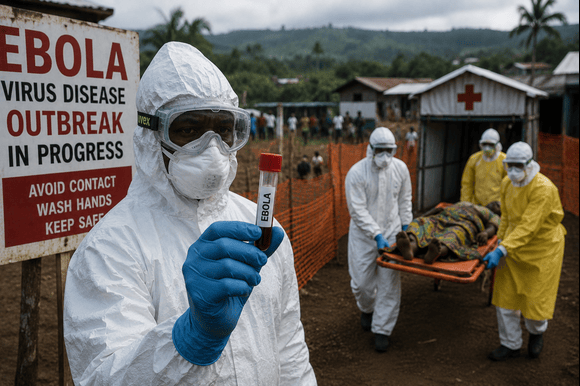
The ongoing Ebola outbreak in the Democratic Republic of Congo is on course to become the deadliest outbreak of the disease ever recorded if the virus continues spreading at its current rate, the World Health Organization has warned.
WHO Director-General Tedros Adhanom Ghebreyesus told reporters that the 2026 outbreak could “eclipse” the 2014-2016 Ebola epidemic, which killed at least 11,000 people across West Africa.
The current outbreak, which was officially declared on 15 May, has already recorded at least 4,300 cases and more than 2,000 deaths, according to health authorities.
The WHO said on Wednesday that it hoped to bring transmission of the virus under control within three months. However, officials stressed that achieving that target would not necessarily mean the outbreak itself had completely ended.
Instead, the immediate objective is to significantly reduce new infections and prevent the virus from continuing to spread through communities.
Health officials have also warned that the outbreak may have been circulating for considerably longer than previously recognised.
Although the epidemic was formally declared in May, health authorities now believe transmission began at least three months earlier.
Ebola Spread May Have Begun in February
WHO Africa Director Dr Mohamed Janabi said the virus was already spreading in February, several months before the outbreak was officially identified.
Speaking at a news conference in Bunia, a city located close to the centre of the outbreak, Janabi said the disease was initially mistaken for other illnesses, including malaria and typhoid.
This delay in recognising Ebola is believed to have allowed the virus to spread before authorities were able to establish a coordinated response.
“We are chasing the virus, the virus is ahead of us,” Janabi said, highlighting the difficulties facing health workers attempting to contain the outbreak.
Research presented by health officials indicates that the virus may have been circulating silently in affected communities before the first official declaration.
The delayed identification has made containment considerably more difficult, particularly in areas where health systems are already under pressure.
The situation is further complicated by the nature of the virus responsible for the current epidemic.
Rare Bundibugyo Ebola Strain Behind Outbreak
The 2026 outbreak has been linked to the Bundibugyo species of Ebola, a relatively rare form of the virus.
The strain has previously been associated with only two known outbreaks, occurring in 2007 and 2012.
Unlike some other Ebola species, there is currently no approved vaccine specifically available for preventing Bundibugyo Ebola, and there are no recognised therapeutic drugs specifically approved to treat infections caused by this strain.
The lack of established vaccines and treatments presents another major challenge for health authorities attempting to contain the current epidemic.
Researchers and medical organisations are therefore racing to develop and test potential vaccines and treatments while the outbreak continues.
The absence of an approved vaccine means health authorities must rely heavily on surveillance, isolation, contact tracing, infection-control measures and rapid medical care to reduce transmission.
Conflict Makes Containment More Difficult
The outbreak is occurring in eastern DR Congo, an area that has experienced prolonged regional instability and insecurity.
The security situation has made it significantly harder for health workers to reach people who may have been infected.
According to Janabi, healthcare teams are currently reaching only around 30% of cases.
That limited access presents a serious obstacle to efforts to identify infections quickly, isolate patients and trace people who may have been exposed to the virus.
In areas affected by insecurity, medical teams can face difficulties travelling between communities, establishing treatment facilities and maintaining regular disease surveillance.
The combination of an active outbreak, limited healthcare access and regional instability has created what officials describe as a highly challenging environment for controlling the disease.
Health workers must not only identify and treat patients but also monitor their contacts and prevent further transmission.
Every missed case increases the possibility that the virus will continue spreading undetected.
WHO Sets Three-Month Target
The WHO has said it wants to reverse the current trajectory of the outbreak within three months.
However, officials have carefully explained that the goal is to bring transmission under control rather than immediately eliminate the disease.
Reducing the number of new infections would provide health authorities with greater opportunity to identify remaining cases and prevent new chains of transmission.
The organisation is working with Congolese health authorities and other partners to strengthen surveillance, improve access to patients and expand efforts to control the outbreak.
But officials acknowledge that the virus currently has an advantage because of the delayed recognition of the outbreak and difficulties reaching affected communities.
The scale of the epidemic has also placed significant pressure on healthcare workers and local medical infrastructure.
What Is Ebola?
Ebola is a rare but potentially deadly viral disease that can cause severe illness and death.
Symptoms can appear anywhere from two to 21 days after infection, meaning people who have been exposed may not immediately show signs of illness.
The disease can initially resemble more common infections such as influenza or malaria.
Early symptoms may include fever, headache and extreme tiredness, and they can appear suddenly.
As the illness progresses, patients can develop more serious symptoms, including vomiting and diarrhoea.
Severe cases can eventually result in organ failure and death.
The virus is transmitted through direct contact with infected bodily fluids.
These can include blood, vomit and other bodily fluids from an infected person.
Because of this method of transmission, strict infection-control procedures are essential when healthcare workers treat suspected or confirmed cases.
Early identification is also crucial because people who are infected can transmit the virus to others, creating additional chains of infection.
Vaccine Trials Underway in Britain
Despite the lack of an approved vaccine for Bundibugyo Ebola, efforts to develop one are now progressing.
The UK’s medicines regulator, the Medicines and Healthcare products Regulatory Agency (MHRA), has authorised the first human trials of a vaccine designed to target the Bundibugyo species.
The vaccine is being developed by researchers at the University of Oxford.
The team is using technology similar to that employed in the Oxford-AstraZeneca Covid-19 vaccine.
The approval of human trials represents an important step in efforts to develop protection against a virus that has previously caused only a small number of known outbreaks.
Three other research groups are also working on potential Bundibugyo vaccines.
However, those candidates have not yet progressed to clinical trials.
The Oxford vaccine will therefore be closely watched as researchers attempt to determine whether it can safely produce an immune response against the virus.
If successful, the development could provide health authorities with an important additional tool for controlling future Bundibugyo outbreaks.
Researchers Testing Existing Antiviral Treatments
Vaccines are not the only medical approach being investigated.
The WHO is supporting a separate clinical trial in DR Congo to examine whether two existing antiviral treatments could improve survival among people infected with the virus.
The trial is intended to determine whether therapies already available for other viral infections could provide benefits to patients suffering from Bundibugyo Ebola.
Finding an effective treatment would be particularly important during the current outbreak because no recognised therapeutic drug is currently approved specifically for this species.
Clinical trials are being conducted under controlled conditions to assess whether the medicines can safely improve outcomes for infected patients.
The research could also provide valuable information for responding to future outbreaks of Bundibugyo Ebola.
A Race Against Time
The current outbreak has created an urgent race between health authorities and the virus.
With thousands of cases already recorded and more than 2,000 deaths reported, officials are concerned that continued transmission could rapidly increase the death toll.
Tedros’ warning that the outbreak could surpass the devastating 2014-2016 epidemic highlights the seriousness of the situation.
That earlier epidemic, which primarily affected Guinea, Liberia and Sierra Leone in West Africa, became the largest Ebola outbreak ever recorded and killed at least 11,000 people.
The possibility that the current outbreak could exceed that death toll has raised alarm among international health organisations.
However, officials are still attempting to prevent that scenario by expanding surveillance, improving access to patients and accelerating research into vaccines and treatments.
Health Workers Face Major Challenges
Medical teams working in eastern DR Congo face multiple obstacles.
The region’s insecurity limits movement and makes it difficult for healthcare workers to reach communities where infections may be occurring.
At the same time, the delayed recognition of the outbreak means the virus may have spread through communities for months before the epidemic was formally declared.
Misdiagnosis during the early stages may have further complicated efforts to identify infections.
Because Ebola can initially resemble diseases such as malaria and typhoid, patients may not immediately be recognised as potential Ebola cases.
This makes disease surveillance and laboratory testing particularly important.
Health workers must also protect themselves while caring for infected patients because direct contact with bodily fluids can result in transmission.
International Response Intensifies
The WHO is working alongside Congolese authorities and other international partners to strengthen the response.
The focus remains on identifying cases, tracing contacts, improving infection prevention and supporting treatment efforts.
At the same time, researchers are accelerating efforts to develop vaccines and determine whether existing antiviral medicines can improve survival.
The combination of public-health measures and medical research is considered essential to bringing the outbreak under control.
But the WHO’s three-month target faces significant challenges.
With only around 30% of cases currently being reached, according to Janabi, a substantial expansion of healthcare access will be required to slow transmission effectively.
The security situation will also remain an important factor.
Without reliable access to affected communities, health authorities could struggle to identify new infections before they spread further.
Concern Over Potentially Historic Death Toll
The possibility of the 2026 outbreak becoming the deadliest Ebola epidemic ever recorded has placed DR Congo’s health crisis under intense international scrutiny.
More than 2,000 deaths have already been reported, and officials fear that the number could rise significantly if transmission is not brought under control.
The rare nature of the Bundibugyo strain adds another layer of difficulty because researchers have comparatively limited experience with large outbreaks involving this species.
There is currently no approved vaccine or recognised specific therapeutic treatment for the strain, although clinical research is now advancing.
The outbreak’s location in a region affected by instability has also restricted the ability of health teams to reach patients.
These factors have combined to create an unusually difficult public-health emergency.
For the WHO and Congolese authorities, the priority is now to get ahead of the virus by finding cases faster, reaching more affected communities and preventing new chains of transmission.
If those efforts succeed, officials may still be able to reverse the current trajectory of the epidemic.
But if the virus continues spreading at its present pace, the WHO has warned that the 2026 DR Congo outbreak could overtake the devastating 2014-2016 epidemic and become the deadliest Ebola outbreak in recorded history.