


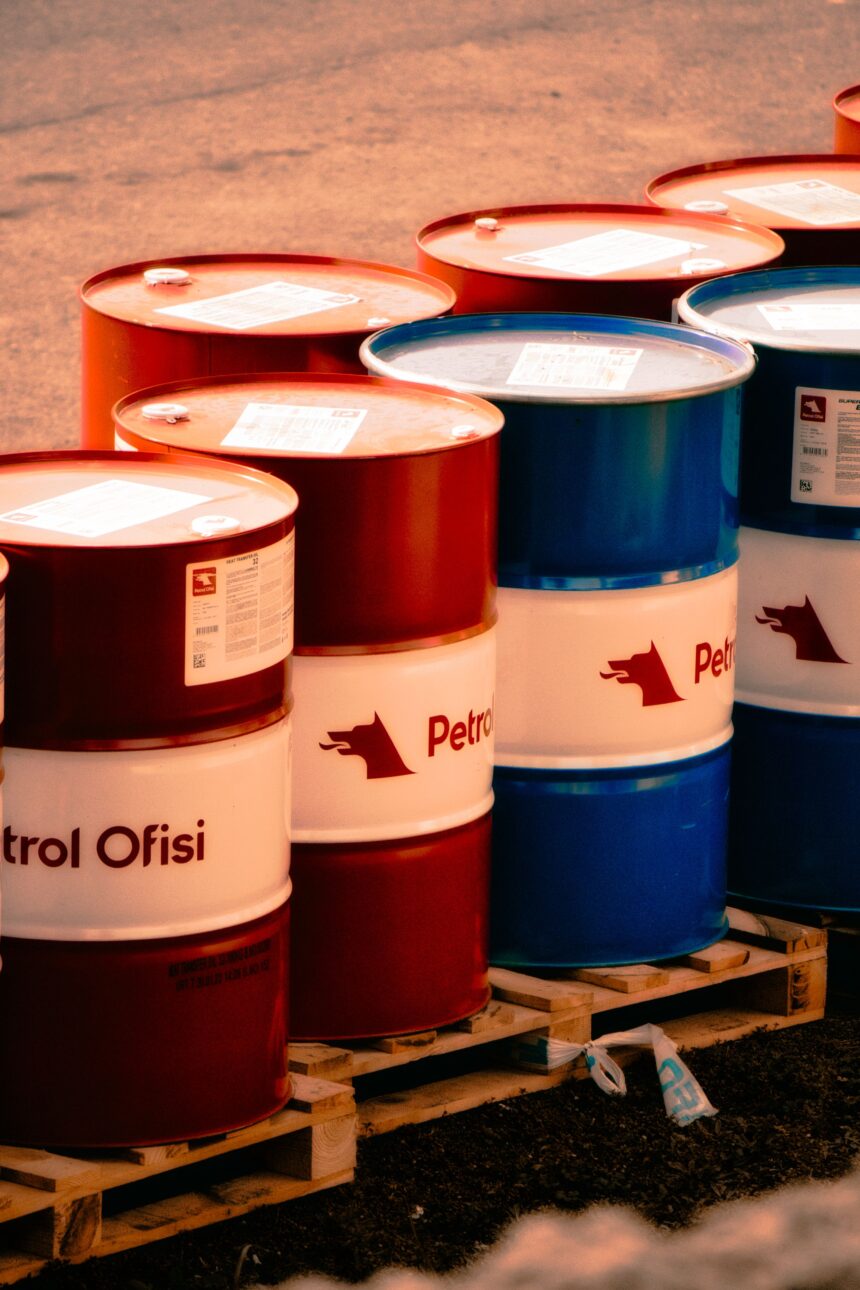
Diesel prices across the United States have climbed to unprecedented levels as the ongoing US-Israel war with Iran continues to push energy costs higher and place increasing financial pressure on American consumers and businesses.
The national average price for diesel has now reached $5.85 per gallon, according to data from the American Automobile Association (AAA). That represents a sharp increase from the average of $3.71 per gallon recorded at the same time last year, and it is also higher than the previous peak recorded after Russia launched its full-scale invasion of Ukraine.
The latest surge in fuel prices has been closely linked to developments in the Iran conflict, which began at the end of February. Wholesale oil prices have risen significantly since the fighting began, with concerns over supply disruptions adding further pressure to fuel markets.
Diesel is particularly important to the US economy because it is widely used by commercial and industrial vehicles. Heavy trucks, trains, boats, buses, agricultural machinery and construction equipment all rely heavily on diesel fuel. As a result, sustained increases in diesel prices can affect not only motorists but also transportation, farming, construction and the broader cost of goods and services.
The increase in fuel costs has also become a growing political issue for the administration of US President Donald Trump, particularly as Americans prepare to vote in the crucial midterm elections in November.
Trump has recently promised to take steps to bring fuel prices down, including through a new oil agreement involving Venezuela. The president said the administration would work to “substantially lower Gas Prices for all Americans” as part of efforts to increase access to additional oil supplies.
The agreement announced on Saturday focuses on the development of 17 strategic oil fields in Venezuela that are estimated to have a proven potential of around 65 billion barrels of oil. According to interim Venezuelan President Delcy Rodríguez, the arrangement is expected to involve more than $100 billion in investment and generate more than $209 billion in taxes for Venezuela.
Under the proposed arrangement, the US government would retain a 55% controlling interest in a joint venture, working alongside what a US official described as an experienced private operator in Venezuela. The agreement is being presented as a major effort to revive Venezuela’s oil industry and increase production.
However, analysts have expressed doubts over how quickly the proposed deal could translate into additional oil supplies and lower prices for American consumers. Venezuela’s energy sector has faced years of political instability, economic difficulties, underinvestment and operational challenges, creating significant obstacles for companies seeking to expand production.
The latest developments come as global oil markets remain under intense pressure because of the disruption surrounding the conflict with Iran.
Oil is a fundamental component of gasoline and diesel production, meaning that disruptions to crude oil supplies can quickly feed through into higher prices at filling stations. One of the biggest concerns for international energy markets has been Iran’s effective closure of the Strait of Hormuz, a strategically important waterway located south of Iran.
The Strait of Hormuz is one of the world’s most important energy routes, with approximately one-fifth of global oil supplies normally passing through the narrow waterway. Any prolonged disruption to shipping through the strait can therefore have major consequences for international oil supplies and prices.
The impact is already being felt by American motorists and businesses. In addition to record diesel prices, gasoline prices have also risen sharply across the country.
The national average price for gasoline has reached approximately $4.15 per gallon, compared with around $3.20 per gallon a year earlier. The increase has added to household expenses at a time when many Americans are already facing higher costs for everyday goods and services.
The pressure is particularly severe in some parts of the United States. AAA data shows significant regional differences in diesel prices, with drivers in Western states generally paying considerably more than consumers in other parts of the country.
Washington state provides one example of the sharp regional disparity. The average diesel price there has risen to approximately $6.81 per gallon, compared with $5.03 per gallon a year ago.
Differences in state fuel taxes, transportation costs and the distance from major oil-producing regions all contribute to variations in prices across the country. States located farther from key sources of domestic oil can face higher costs when crude and refined fuel products have to travel longer distances.
The rising cost of diesel is also likely to have consequences beyond the fuel pump. Since diesel powers a large portion of the country’s freight transportation network, higher fuel costs can increase the expense of moving food, manufactured products and other goods across the United States.
Trucking companies, farmers, construction businesses and other industries that depend heavily on diesel may face higher operating expenses. Those costs can eventually be passed on to consumers through increased prices for goods and services.
The political consequences could also become increasingly significant for the Trump administration as the November midterm elections approach.
Rocketing fuel prices have historically been a major concern for American voters because gasoline and diesel prices are highly visible indicators of household expenses and broader economic conditions. Higher prices at filling stations can quickly influence public perceptions of the economy and the performance of the government.
Recent Reuters/Ipsos polling indicates growing dissatisfaction with both Trump and the conflict. Trump’s approval rating has fallen to 33%, while only 31% of Americans surveyed said they approved of the war.
The figures highlight the political challenge facing the administration as it attempts to balance its foreign-policy objectives with growing concerns over the economic impact of the conflict.
For American households and businesses, the immediate concern remains the cost of energy. If disruptions around the Strait of Hormuz continue and global oil supplies remain constrained, fuel prices could remain elevated or rise even further.
The administration’s agreement with Venezuela could eventually provide additional supplies to international markets, but analysts caution that expanding Venezuelan oil production would take time and that longstanding problems within the country’s energy sector could limit the immediate benefits.
For now, Americans are confronting significantly higher prices for both major transportation fuels. Diesel has reached a record national average of $5.85 per gallon, while gasoline has climbed to approximately $4.15 per gallon.
With the conflict continuing to affect global energy markets, the trajectory of oil and fuel prices could become an increasingly important economic and political issue in the United States in the months leading up to the midterm elections.