

Kyiv, June 26, 2026 — A former senior official within Ukraine’s intelligence community has been sentenced to life imprisonment after being convicted of spying for Russia’s Federal Security Service (FSB), in one of the country’s most significant counterintelligence cases since the start of the war with Moscow.
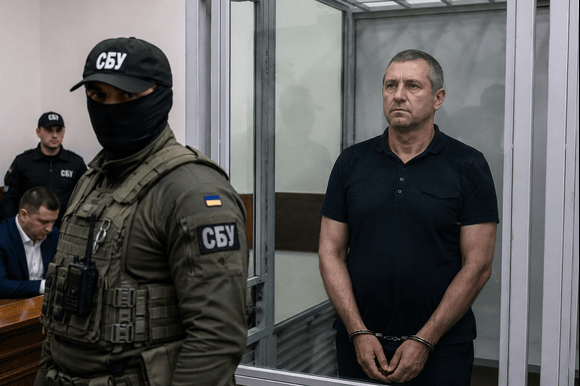
The Shevchenkivskyy District Court in Kyiv found former Colonel Dmytro Kozyura guilty of high treason committed under martial law, along with illegal possession and handling of weapons, ammunition and explosives. Ukrainian prosecutors said the former intelligence officer had betrayed his country by secretly supplying highly classified information to Russian intelligence in exchange for financial compensation.
Kozyura previously served as chief of staff of the Security Service of Ukraine’s (SBU) Anti-Terrorism Centre, a position that granted him access to some of the country’s most sensitive national security information and placed him among the agency’s senior operational officials.
According to Ukraine’s Prosecutor General’s Office, Kozyura deliberately agreed to cooperate with Russia’s FSB by transmitting intelligence that constituted state secrets, actions prosecutors described as a direct threat to Ukraine’s national defence during wartime.
Officials argued that the severity of the offence justified the maximum punishment available under Ukrainian law.
The investigation, conducted under the codename “Rat,” uncovered what authorities described as a sophisticated espionage network operating inside Ukraine.
Investigators said Kozyura regularly communicated with his Russian handlers from a covert safehouse located in Kyiv, using a separate mobile phone and an independent Wi-Fi connection to conceal his activities from Ukrainian security agencies.
The Security Service of Ukraine stated that the operation exposed years of clandestine cooperation between the former officer and Russian intelligence.
According to the SBU, Kozyura was initially recruited by the FSB during a meeting in Vienna in 2018. Although contact between the two sides reportedly remained dormant for several years, Russian intelligence officers allegedly re-established communications with him in December 2024, assigning him new espionage tasks as the conflict intensified.
Investigators said the former intelligence officer subsequently began gathering sensitive information concerning Ukraine’s military capabilities, the deployment and movement of Russian forces, national defence infrastructure, and the activities of Ukraine’s political and military leadership.
Authorities alleged that Kozyura also collected intelligence related to Ukrainian weapons systems and operational planning while continuing to occupy a position that provided extensive access to classified information.
Prosecutors further accused him of conducting surveillance on command facilities operated by the Security Service of Ukraine and systematically reporting the aftermath of Russian missile and drone strikes.
According to the Prosecutor General’s Office, he regularly supplied details about the consequences of attacks, including casualty figures involving both Ukrainian soldiers and civilians.
Officials said Kozyura remained in frequent contact with his Russian handlers and repeatedly transmitted documents carrying official “Secret” classifications.
Investigators argued that the information he allegedly provided could have significantly assisted Russian military planning and intelligence assessments throughout the conflict.
The Prosecutor General’s Office emphasized that Kozyura had spent his entire professional career serving within Ukraine’s security services before ultimately betraying the institution responsible for protecting the country’s national security.
As a senior officer, he had been entrusted with coordinating anti-terrorism operations and safeguarding highly confidential government information.
Prosecutor General Ruslan Kravchenko described the case as one of the most serious examples of internal betrayal uncovered during the war.
He said any individual who wears the uniform of Ukraine’s security services while secretly working for Russia’s FSB becomes an enemy of the Ukrainian state and deserves the harshest punishment available under the law.
Kozyura was arrested in February 2025 following what the SBU described as a lengthy counterintelligence operation during which investigators closely monitored his movements and communications.
According to the agency, officers maintained continuous surveillance of the suspect, documenting meetings, communications and intelligence exchanges before ultimately moving in to detain him.
Officials said evidence showed he repeatedly visited the Kyiv safehouse to communicate with Russian intelligence officers using equipment specifically intended to avoid detection.
The Security Service also identified the alleged FSB officer responsible for supervising Kozyura as Yuriy Shatalov, who investigators say coordinated a broader Russian espionage network targeting Ukraine.
Authorities believe Shatalov directed intelligence collection activities while overseeing communication with agents operating inside Ukrainian territory.
In a notable aspect of the investigation, the SBU revealed that it had managed to turn Kozyura into an unwitting source of misinformation after discovering his alleged activities.
Rather than immediately arresting him, Ukrainian counterintelligence officers reportedly monitored his communications while preventing him from accessing genuinely sensitive intelligence.
During that period, investigators said they deliberately allowed certain carefully prepared information to reach Russian intelligence, enabling Ukraine to feed misleading assessments to Moscow while protecting critical military secrets.
Officials argued that the strategy helped reduce the damage caused by the alleged espionage while simultaneously exposing additional elements of the Russian intelligence network.
Ukraine has intensified efforts to uncover suspected Russian spies and collaborators since Moscow launched its full-scale invasion in February 2022.
Security agencies have announced dozens of arrests involving individuals accused of passing military information, assisting Russian missile targeting, sabotaging infrastructure or cooperating with Russian intelligence services.
The latest conviction underscores Kyiv’s determination to eliminate espionage networks operating within state institutions as the war continues.
Ukrainian officials maintain that protecting classified military information remains one of the country’s highest security priorities, particularly as Russian intelligence agencies continue efforts to infiltrate government structures and obtain operational intelligence.
With Kozyura now sentenced to life imprisonment, Ukrainian authorities say the case serves as a warning that any official found collaborating with foreign intelligence services during wartime will face the most severe legal consequences available under Ukrainian law.