

Beirut, June 26, 2026 — Israeli military operations in southern Lebanon continued on Thursday despite an existing ceasefire agreement, with fresh airstrikes and ground activity leaving several people dead as senior Israeli and Lebanese officials concluded a final round of negotiations in Washington aimed at easing tensions along the border.
Lebanese health authorities said three people were killed and another person was injured after an Israeli strike targeted a vehicle travelling on the road connecting the towns of Zawtar and Mayfadoun in Nabatieh Governorate.
The latest attack came amid continued military activity across southern Lebanon, where residents report ongoing air raids, drone operations and ground incursions despite months of diplomatic efforts intended to preserve the ceasefire.
Lebanon’s Ministry of Public Health confirmed that emergency teams responded to the strike shortly after it occurred, while local authorities launched an investigation into the circumstances surrounding the incident.
At the same time, Lebanon’s National News Agency (NNA) reported that Israeli forces burned several homes in the town of Ain Arab after issuing evacuation warnings instructing residents to leave the area before 5:00 p.m. on Wednesday. Witnesses said families fled the town ahead of the deadline as military operations intensified.
The health ministry said the overall human toll from the conflict continues to rise. Since fighting erupted on March 2, at least 4,230 people have been killed across Lebanon, while another 12,179 have suffered injuries ranging from minor wounds to life-threatening conditions.
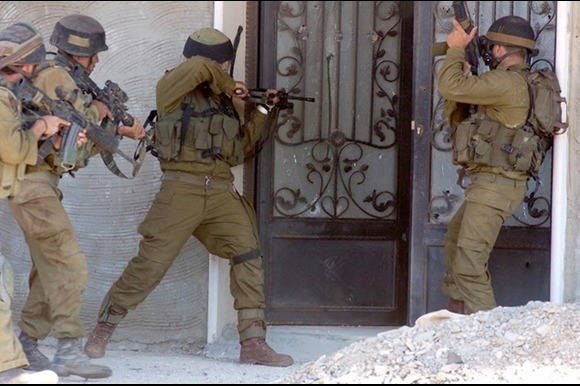
The Israeli military confirmed carrying out operations in southern Lebanon on Thursday, saying its forces had targeted what it described as Hezbollah operatives operating near the so-called security zone established along the border.
According to the Israeli army, soldiers identified five individuals alleged to be Hezbollah members in the area of Zawtar al-Sharqiyah whom commanders believed posed an immediate threat to nearby forces. In a separate incident, the military said another armed Hezbollah operative was located near the Ali al-Taher Ridge and was subsequently targeted.
Israel has repeatedly maintained that it will continue taking military action against Hezbollah positions whenever it believes its forces or northern communities face security threats.
Reporting from Nabatieh, journalists on the ground said the ceasefire remains highly fragile as Israeli forces continue conducting strikes in frontline villages located close to areas that remain under Israeli military control.
Residents living near the occupied border zone say drone surveillance flights, artillery fire and occasional aerial attacks have become routine despite the formal cessation of large-scale hostilities. Local communities also report the use of stun grenades and other military measures intended to discourage civilians from approaching contested areas.
Military analysts note that several villages near Nabatieh resisted Israeli advances during weeks of intense fighting earlier in the conflict. Although Israeli ground forces did not permanently occupy all of those communities, observers say continued military pressure allows Israel to maintain operational influence over surrounding territory while negotiations continue.
Control of strategically important areas remains one of the central issues being discussed during ongoing diplomatic contacts between Lebanon and Israel.
Senior officials from both countries have spent the past three days participating in United States-backed negotiations in Washington focused on implementing the next stage of the ceasefire agreement.
The discussions have centred on proposals for Israeli forces to gradually withdraw from portions of territory captured during recent fighting while transferring security responsibilities to the Lebanese Armed Forces.
A senior US State Department official said Israel had already taken what Washington described as a concrete step toward implementing the proposal by reducing its military presence in part of a buffer zone in southern Lebanon.
American diplomats have expressed cautious optimism that additional withdrawals could follow if negotiations continue to make progress.
Israeli officials, however, insist that any further redeployment will depend on security conditions inside southern Lebanon.
Government spokesman David Mencer told reporters that Israel has no intention of withdrawing its forces while Hezbollah continues to possess military capabilities near the border.
He said Israel’s primary responsibility remains protecting communities in the country’s north and preventing armed groups from re-establishing positions close to Israeli territory.
According to Mencer, any future redeployment of Israeli forces would only occur after southern Lebanon has been fully demilitarised and Hezbollah has surrendered its weapons.
Israeli Defence Minister Israel Katz echoed that position, stating that Israel opposes abandoning what it considers essential security zones in Lebanon.
Katz said Israeli troops would continue operating in designated security areas in Lebanon, Syria and Gaza for as long as military commanders believe their presence is necessary to safeguard Israeli national security.
Lebanese military officials have challenged Israeli claims that meaningful withdrawals are already underway.
One senior Lebanese security official said recent developments observed on the ground indicate the opposite, arguing that Israeli military activity has remained intense despite diplomatic discussions taking place in Washington.
Nevertheless, American officials continue to express confidence that negotiations are moving in a positive direction.
During a visit to Bahrain, US Secretary of State Marco Rubio said both governments were making encouraging progress toward what he described as a commitment of intent designed to establish a framework for future cooperation.
Rubio acknowledged that any final agreement would require patience and sustained diplomatic engagement but suggested meaningful progress had been achieved.
He noted that, for the first time in decades, the internationally recognised government of Lebanon is engaged in direct discussions with the Israeli government, describing the development as an important diplomatic milestone.
Support for the negotiations was also reflected in a joint statement issued by the United States and Gulf partner nations.
The statement welcomed ongoing dialogue between Lebanon and Israel and emphasized that progress toward border security and regional stability should not depend on the outcome of unrelated conflicts elsewhere in the Middle East.
It also reiterated calls for all non-state armed organisations operating in Lebanon to surrender their weapons, reflecting one of Washington’s long-standing objectives in the region.
Direct negotiations between Lebanese and Israeli representatives began in April following sustained diplomatic pressure from the United States.
However, Hezbollah has strongly condemned the talks, insisting that Israel must first complete a full withdrawal from Lebanese territory before any broader political discussions can take place.
The organisation argues that continued Israeli military operations undermine the credibility of the ceasefire and make meaningful negotiations more difficult.
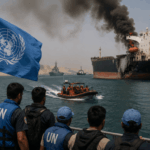
Separately, France and Italy announced plans on Thursday to establish a new multinational security coalition that would eventually replace the United Nations Interim Force in Lebanon (UNIFIL).
French President Emmanuel Macron unveiled the proposal following talks with Italian Prime Minister Giorgia Meloni in the French coastal town of Antibes.
Macron said the new multinational mission would be created in close coordination with both the European Union and the United Nations and would focus on strengthening Lebanon’s sovereignty while supporting the operational capabilities of the Lebanese Armed Forces.
He said the proposed coalition would also help prevent Lebanese territory from becoming a platform for renewed regional confrontation and would contribute to maintaining long-term stability along the border.
The announcement follows last year’s decision by the UN Security Council to end UNIFIL’s mandate on December 31, 2026. The move came after months of international debate over the future of peacekeeping operations in southern Lebanon and growing calls for a new security framework better suited to evolving conditions on the ground.
As diplomatic negotiations continue and military operations persist, uncertainty remains over whether the fragile ceasefire can be preserved. With violence continuing despite ongoing talks, both regional leaders and international mediators face mounting pressure to prevent renewed escalation and secure a lasting agreement capable of bringing stability to the Israel-Lebanon border.