


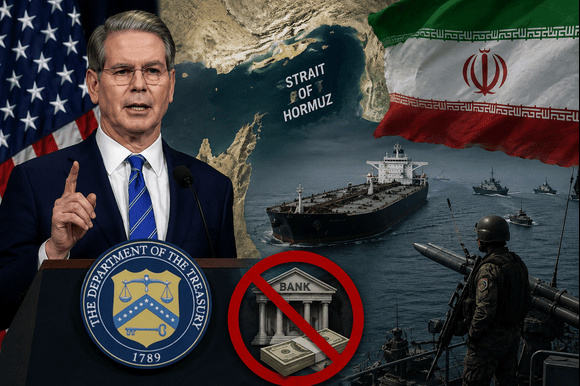
The United States has threatened Iran with what Treasury Secretary Scott Bessent described as “the single greatest financial offensive ever”, saying the US-Israel war with Iran was now “entering its endgame” and warning that Washington would move to cut off the Iranian regime from the global economy.
Bessent said the United States would seek to sever all economic ties with Iran in what he described as an “economic D-Day”. He also warned that countries, financial institutions and businesses that continue to partner with Tehran could themselves face isolation from the US financial system.
The latest threat represents a significant escalation in Washington’s economic pressure campaign against Iran and comes after several previous threats, U-turns and extended deadlines from President Donald Trump’s administration during the conflict.
Iran has rejected Bessent’s latest warning and said it could take further action against the region’s oil exports if the war continues.
According to Reuters, Iranian officials said the country would shut down all oil exports from the region if hostilities continued. Tehran has also issued a fresh warning to shipping companies, saying vessels should not attempt to pass through the Strait of Hormuz without Iranian permission.
The Strait of Hormuz is one of the world’s most important energy routes. Around one-fifth of global oil and gas supplies normally pass through the narrow waterway, which lies between Iran and Oman at the entrance to the Persian Gulf.
However, the flow of energy through the strait has been effectively blocked by Iran since the conflict began at the end of February, creating major disruption to global energy markets and increasing concerns about fuel prices and inflation.
Bessent outlined the latest US position in an opinion article published by the Financial Times. He did not provide detailed information about the specific measures Washington plans to introduce, but he is expected to explain the administration’s strategy in greater detail during a press conference in the United States at 13:00 local time, or 18:00 BST, on Monday.
In his article, Bessent said the US objective was to eliminate the economic resources supporting the Iranian government.
“The world should understand that our objective is to sever every economic lifeline that sustains the tyrannical regime until Tehran stands alone,” he wrote.
The Treasury secretary’s warning comes after months of increasingly severe rhetoric from the Trump administration as Washington and its allies attempt to pressure Tehran.
President Trump has previously issued several threats aimed at forcing Iran to agree to an end to the conflict and reopen the Strait of Hormuz. In April, Trump warned that “a whole civilisation will die tonight” unless Iran agreed to a deal to end the war and unblock the strategic waterway.
The administration later stepped back from that position after Pakistan intervened as a mediator and called for greater diplomatic efforts to resolve the conflict.
The latest financial threat suggests that Washington may now be preparing to place greater emphasis on economic warfare rather than relying solely on military pressure.
Iran is already subject to extensive US sanctions, which have restricted its access to international banking, investment and trade. The new measures threatened by Bessent could further increase the pressure on Iranian banks, companies and individuals while also targeting foreign institutions that continue to conduct significant financial business with Tehran.
Bessent’s comments also come as the economic consequences of the Iran conflict continue to spread across the United States and international markets.
Higher global oil prices have increased concerns about household finances and the cost of living. Petrol and diesel prices have risen significantly compared with the same period last year, placing additional pressure on consumers and businesses.
In the United States, gasoline prices have climbed above $4 a gallon, adding to economic concerns ahead of the midterm elections in November.
Affordability and the cost of living are already among the major concerns of American voters, meaning continued disruption to energy supplies could create additional political difficulties for the Trump administration.
Oil markets have also reacted sharply to developments surrounding the war and the Strait of Hormuz. On Monday, the price of Brent crude, the international benchmark for oil, stood at around $93 a barrel.
Any prolonged disruption to shipping through the Strait of Hormuz could push energy prices even higher, potentially increasing transportation, manufacturing and food costs around the world.
The economic pressure comes as Bessent attempts to manage broader financial challenges facing the US government.
Last week, the Treasury secretary announced that the US government would intervene in the bond markets and increase purchases of government debt in an effort to strengthen demand for US Treasury bonds and reduce borrowing costs.
However, the effect of that announcement was short-lived. Long-term borrowing costs increased again the following day, limiting the immediate impact of the government’s intervention.
The administration’s economic campaign against Iran is also taking place against the backdrop of a long-running dispute over Tehran’s nuclear programme and the history of US sanctions.
In 2015, former US President Barack Obama and several international partners reached a landmark nuclear agreement with Iran. Under the agreement, Tehran accepted restrictions on its nuclear programme in exchange for the lifting or easing of many international sanctions.
The agreement, formally known as the Joint Comprehensive Plan of Action, was designed to prevent Iran from developing nuclear weapons while allowing it greater access to international trade and financial markets.
However, President Trump withdrew the United States from the agreement in 2018, describing it as “defective at its core”, and restored extensive US sanctions against Iran.
The decision marked the beginning of a renewed period of economic confrontation between Washington and Tehran.
During Joe Biden’s presidency, the United States made several attempts to revive the Obama-era nuclear agreement and restore restrictions on Iran’s nuclear activities in exchange for sanctions relief.
Those efforts ultimately failed to produce a new agreement, leaving the Iranian economy under significant US sanctions and contributing to continued tensions between Tehran and Washington.
The Trump administration has since expanded its pressure campaign against Iran.
In April this year, Washington introduced a new wave of sanctions targeting foreign banks and companies accused of doing business with Tehran. The measures came after it became increasingly clear that US and Israeli military operations had not succeeded in forcing the Iranian regime to surrender.
The latest threat from Bessent therefore represents another stage in a broader campaign designed to isolate Iran economically and politically.
Washington is now warning not only Iran but also other countries that continue to maintain financial and commercial relationships with Tehran. Such measures could create difficult choices for governments and international companies that have business interests in Iran but also rely heavily on access to the US financial system.
Iran, meanwhile, has shown no indication that it intends to accept the US demands.
Its warning that oil exports from the region could be halted if the war continues raises the prospect of an even greater disruption to global energy supplies. The renewed warning over shipping through the Strait of Hormuz could also increase pressure on international shipping companies and further complicate efforts to restore normal commercial traffic.
The strategic importance of the waterway means any prolonged closure or restriction could have consequences far beyond the Middle East. Countries in Europe and Asia that rely heavily on Gulf energy supplies could face higher import costs, while businesses and consumers worldwide could experience further inflationary pressure.
The conflict has therefore developed into not only a military confrontation but also a major economic battle involving energy markets, international banking, shipping and global trade.
Bessent’s declaration that Washington is preparing an unprecedented financial offensive against Iran signals that the Trump administration intends to use those economic tools more aggressively as it seeks to bring the conflict to an end.
However, Iran’s threat to disrupt regional oil exports and impose restrictions on shipping suggests that Tehran is also prepared to use its control over strategically important energy routes as leverage.
With the Strait of Hormuz already severely disrupted, oil prices elevated and international businesses facing growing uncertainty, the economic consequences of the conflict are likely to remain a major concern for governments and markets around the world.
The next steps announced by the US Treasury could determine how far Washington is prepared to go in isolating Iran and whether the latest economic offensive leads to increased pressure on Tehran or triggers another round of escalation across the region.