


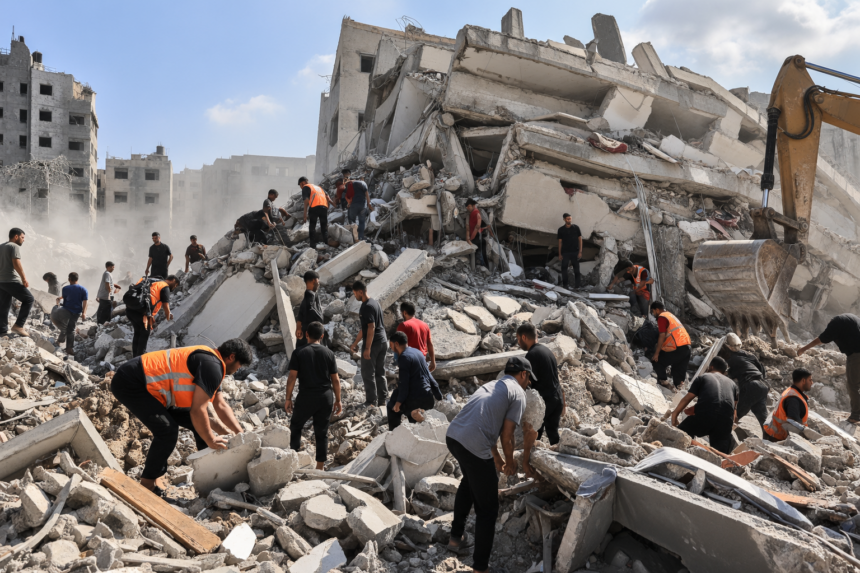
At least 16 people, including women and children, were killed when a war-damaged residential building collapsed in Gaza City, while rescue teams continued searching for people believed to be trapped beneath the debris.
A partially destroyed multi-storey building collapsed in the Tal al-Hawa area of Gaza City, bringing down several floors and burying people inside. The latest reported death toll has reached at least 16, with more than 25 people injured, according to the Associated Press.
The building had already sustained serious damage during the Israel-Hamas war. Residents had continued living there despite concerns about its structural condition, according to accounts from the area.
Rescue teams search through collapsed building
Emergency workers and local residents searched through the remains of the building after the collapse. The structure’s floors were compressed together, leaving large quantities of concrete, metal and other debris covering the area.
Rescue operations have been complicated by shortages of heavy machinery and other equipment. Gaza’s Civil Defence teams have previously reported having to rely heavily on manual labour when appropriate rescue machinery is unavailable. Reuters reported that responders were digging through the wreckage by hand while attempting to locate survivors.
The number of people believed to be missing has varied as rescue teams have continued assessing the site. Earlier reports said dozens of people could be trapped beneath the rubble, meaning the casualty figures could change as the search continues.
Building had been damaged during the war
The collapse has highlighted the dangers faced by Palestinians living in buildings weakened by years of conflict.
Reports from Gaza indicate that the affected residential structure had previously suffered damage during Israeli military operations. Many displaced families have had limited housing alternatives and have continued living in damaged buildings or temporary shelters.
The Associated Press reported that the building housed several displaced families and that its structural condition had deteriorated as a result of damage sustained during the conflict.
Concerns over other unsafe buildings
The disaster has also renewed concerns about other damaged structures across Gaza.
Civil Defence officials have warned that numerous buildings remain structurally unsafe. Reuters reported that thousands of structures across Gaza have been damaged during the conflict, leaving residents exposed to the possibility of further collapses.
With reconstruction severely limited, many people have had few options beyond returning to damaged homes or living close to the remains of destroyed buildings.
Other Israeli strikes reported
The building collapse occurred amid continued reports of violence in Gaza.
According to the information provided by Palestinian health officials and Hamas sources, Israeli air strikes elsewhere in Gaza killed several Palestinians, including children and a Hamas commander. The Israeli military said it had targeted Hamas personnel in southern and northern Gaza.
Separately, the British charity Medical Aid for Palestinians reported that a patient was killed by a drone at a health centre it supports in Jabalia, northern Gaza.
These claims come from different parties to the conflict and could not all be independently verified from the available reports.
A growing humanitarian challenge
The collapse illustrates one of the less visible dangers facing Gaza’s population: the threat posed by buildings that remain standing after sustaining major structural damage.
For residents who have been displaced repeatedly, finding safe accommodation has become increasingly difficult. Damaged residential buildings can provide shelter when other options are unavailable, but weakened structures can collapse without warning.
As rescue workers continue searching the ruins in Gaza City, authorities and humanitarian organisations face the additional challenge of determining which damaged buildings remain safe enough to occupy.
The final number of victims from the Tal al-Hawa collapse may change as rescue crews gain access to areas beneath the debris.